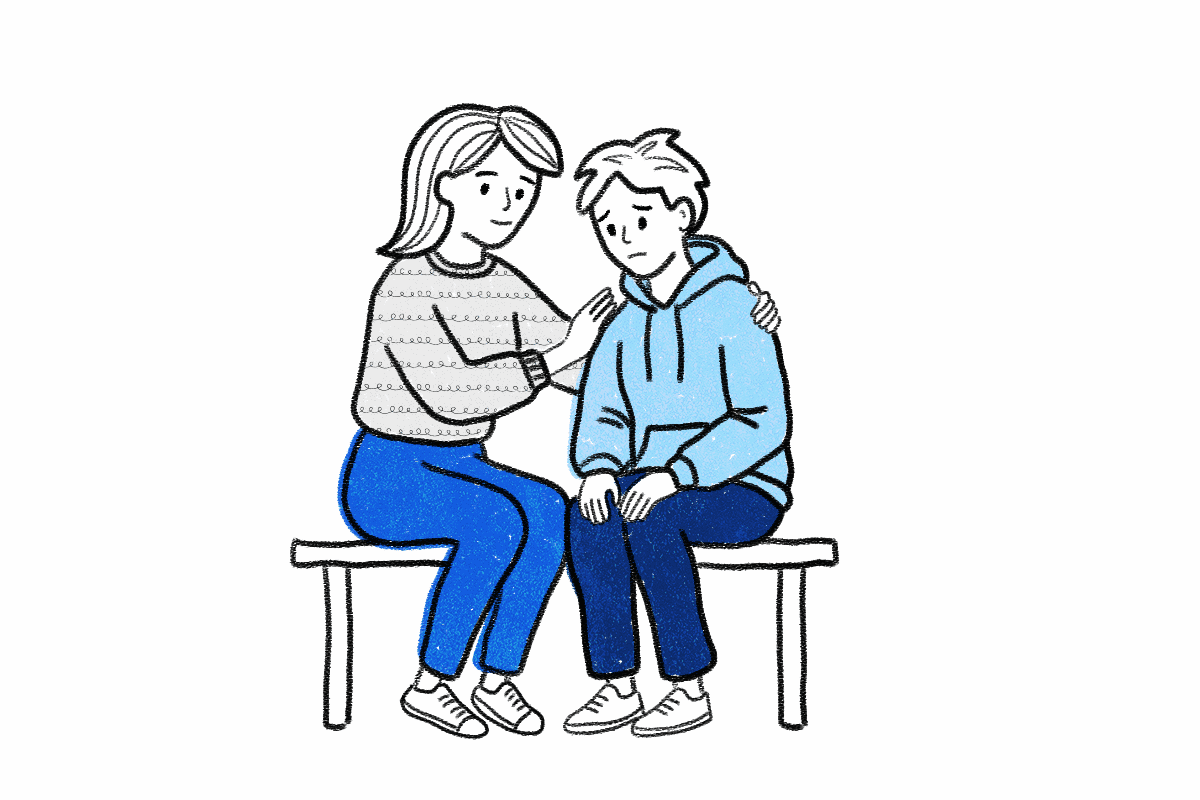

Watching a loved one struggle with substance abuse can feel scary, frustrating, and leave you confused over what to do next. You might find yourself searching for answers about how to get someone to go to rehab when they refuse help or don’t believe they have a problem.
The reality is that many who experience drug addiction, alcohol addiction, or other substance use disorder aren’t ready to seek help right away. Part of addiction is that sometimes, it can be difficult for someone to recognize the impact their behavior has on themselves and those around them.
This guide is here to provide you with practical strategies to try, common mistakes to avoid, and tips for what to do if your loved one still refuses help.
Key Takeaways:
- It is normal to want to try to force someone to go to rehab when you notice their lifestyle is hurting them and those around them.
- Timing matters and it is important to bring the topic up when the loved one is calm and sober, if possible.
- Supporting someone you love in active addiction is hard. Be sure to understand what firm, loving boundaries look like and practice self-care.
- It is normal for someone with an active addiction to resist help initially. Keep conversations focused on observations and concern for the person, not on the harm they have caused you personally.
How Do You Get Someone to Go to Rehab?
When families and friends see the negative impact of addiction on their loved one, the only thing they want is to get them the help they need.
While it is natural to want someone you care about to get help, you can’t force someone to accept treatment before they are ready.
You can, however, make the path to treatment easier by helping them address their fears and concerns about rehab, explore programs with them, and walking them through the admission process.
How can I help someone I love to realize that they need help?
While you can’t force help on someone, you can create opportunities for honest conversations that can help them understand the need for help.
For example, instead of saying emotionally charged comments, like: “You’re ruining your life and you need rehab.”
Instead, say something along the lines of: “I’ve noticed that you’ve been missing work lately and don’t seem as happy. I’m worried about you and I want to help.”
Focusing on observations (e.g., “I’ve noticed…” statements) instead of accusations (“You are…” statements) can help people be more receptive to help with drug abuse or alcohol abuse.
Keep in mind that if the person you care about also has other mental health challenges or an underlying mental health disorder like depression or anxiety, it is essential to approach conversations with additional care.
It is common for people to self-medicate with substances when they have another underlying condition. Dual diagnoses, where someone has both a substance use disorder and mental health disorder often coexist together.
Remember that the goal isn’t to “win” an argument. It is to help someone you care about begin to consider the possibility that addiction treatment could improve their life and overall well-being.
How do I choose the right moment?
Bringing up treatment can feel intimidating, awkward, and scary. One of the biggest mistakes that families make is bringing up rehab during an argument, crisis, or emotionally charged moment.
Avoid discussing treatment when your loved one is:
- Intoxicated
- Experience withdrawal symptoms
- In the middle of a fight
- Surrounded by other people who may not be supportive
- Already feeling embarrassed
For example, telling someone that they need drug rehab in the middle of or immediately after a heated family argument is unlikely to encourage the person to go to a rehab facility.
Better times to consider bringing up rehab include when the person is:
- Sober
- Calm
- Open to a conversation
- Already having a conversation on recent consequences (e.g., placed on a performance plan at work for missed shifts)
- Expressing frustration over their addiction
For example, someone may be more willing to discuss change after a recent health scare, such as needing Narcan after an opioid overdose.
Choosing the right time doesn’t guarantee the person will enter treatment, but it increases the odds of a productive conversation.
What can I do to help them not feel judged?
Someone experiencing addiction often already carries intense shame and may be more sensitive to feelings of judgement.
It is essential to handle conversations tactfully.
When discussing treatment, try to:
- Listen more than you talk
- Avoid labels and insults
- Focus on concern, not blame
- Use “I” statements versus “you” statements
- Acknowledge their concerns
- Validate their feelings
For example, instead of saying things like:
- “You need to stop drinking.”
- “You’re going to hurt someone.”
- “Don’t you realize the impact your drug use has on your family?”
Try:
- “I’m worried about how your alcohol use is affecting your happiness.”
- “I’ve noticed you seem more tired and down lately.”
- “Is everything ok? I noticed you stopped running with us on Saturdays.”
A person is more likely to accept help when they feel understood and seen versus criticized. Your role is to provide support and encouragement, not judgement.
How can I help them feel less overwhelmed while looking for rehab?
You can help someone you love feel less overwhelmed by going into treatment by providing transportation, or sitting with them as they explore options online and by phone.
Starting treatment can feel overwhelming. It is normal to have questions about things like insurance provider coverage, what happens to your job or school when you make the decision to start treatment, and what all of the different treatment levels are.
Many treatment programs, like Sandstone Care, offer an instant insurance verification tool. We also have an online chat with the option to chat with a real human, not just an AI bot, if picking up the phone to call feels too intimidating right away.
Practical steps you can help with, if your loved one consents, are:
- Verifying insurance benefits. Many plans will help pay for or fully cover treatment options, such as detox, inpatient rehab centers, and outpatient programs.
- Understanding available treatment options. Not everyone requires the same level of care. Some may require inpatient care or dual diagnosis treatment. Whereas others may do better in an outpatient setting.
- Simplifying reaching out. While a lot of information can be gathered online, typically you’ll need to call a treatment center ahead of time. Consider offering to start the conversation or be with the person for support when they make the call.
By helping with the information gathering and identifying possible treatment centers that the loved one’s insurance covers (or what out of network rates are), you can help to reduce anxiety around treatment and make it feel more achievable.
Should I hold an intervention?
While interventions can be helpful, they aren’t always necessary to help someone that you love to begin exploring treatment options for what they are going through.
A structured intervention brings together family members and close friends to discuss concerns and encourage treatment.
The goal is not to shame someone into treatment. Instead, it is a way to clearly communicate observations about how addiction is affecting everyone involved, while also presenting a solution.
Working with a professional interventionist can help plan the conversations and reduce conflict.
Interventions can be helpful when:
- Multiple people are concerned
- Previous conversations haven’t worked or resulted in conflict
- The addiction is severe
- There are increased safety concerns
Rarely, but occasionally, interventions are useful in situations where court-ordered treatment or other immediate risks are present.

Common Mistakes that Push People Away from Treatment
Even the most well-intentioned conversations can accidentally make recovery seem like a punishment.
Common mistakes include:
- Arguing about whether or not the person has a problem
- Trying to shame someone into treatment (e.g., using statements like “you’re selfish” or “you’re ruining everything”)
- Making empty threats
- Expecting immediate change
Remaining curious, focused on the person you love, and refraining from trying to “win” an argument or guilt someone into treatment are typically more effective than shaming them.
Will giving an ultimatum help get someone into rehab?
Sometimes ultimatums can help when they are used as part of setting a healthy boundary, but typically this should only be used as a last resort.
Clear consequences and boundaries can help motivate someone to change. Healthy boundaries also protect your own safety and well-being.
For example, an ultimatum like, “go to rehab today or I will never speak to you again” probably won’t encourage someone to want to get help. They are more likely to feel angry with you and distrust what you are telling them.
However, saying “I won’t allow you to continue to live in our home if you continue to use drugs” or “I am going to stop helping you with your rent while you are actively using” are examples of healthy boundaries that are phrased like ultimatums.
Just because the boundary you are setting is a healthy one, doesn’t mean it won’t cause an argument or a fight, but in the end it can act as a wake-up call for the person you are caring for.
How do I pick the right moment to bring up rehab?
There is no perfect moment to bring up rehab, but there are certain times and circumstances that can help them feel less pressured, less overwhelmed, and more willing to hear what you are sharing with them.
However, it is better to pick a moment where the person is calm and isn’t experiencing a crisis or other conflict.
For example, bringing up rehab in the middle of an argument and trying to “win” the argument by proving that the person needs rehab isn’t likely to be successful.
A better time might be while you’re out for a walk with them or if you’re checking in because you didn’t see them at a regular event they normally go to with you, like a book club or church.
Is it selfish to try to get someone else to go to rehab?
No. It is not selfish to want someone you care about to receive substance abuse treatment.
However, your motivation matters. The conversation should be focused on their life, not the pain they’ve caused you in your life. Keep the conversation focused on them.
There is a difference between this:
“I’ve noticed you are skipping work and you seem more down. I’m worried about you and your mental health. I’d like to talk to you about some treatment centers I’ve researched.”
And this:
“You need to fix yourself. I can’t believe how selfish you are. Every time you drink, I have to pick up your slack. Get help now or else you’re never getting another penny from me.”
The first lists observations and demonstrates willingness to help by looking up treatment options. The second statement is full of blame, criticism, and threats.
Should I keep helping them with money if they won’t go to a drug or alcohol rehab?
This is a common and difficult question that families face and there is no universal answer. However, healthy boundaries around financials are critical for keeping yourself safe, and avoiding enabling an addiction.
In some situations, financial support can help the person maintain their housing, food, and basic needs like utilities.
In other cases, the money may go towards continued drug use or alcohol use.
One way to ensure that money is going where you intend it to, is to pay companies directly. For example, pay part of their rent or mortgage directly with the leasing company or bank. Or call their utility companies and pay those bills or parts of them.
Learning to set boundaries is essential and it is important to understand if your actions are helping the person towards recovery or enabling their harmful patterns of behavior.
What to Do If They Still Say No
Sometimes you can do everything “right” and the person still says no to treatment.
Remember that at the end of the day, the person you are trying to help needs to make the decision for themselves.
While their “no” can feel frustrating, it is essential to avoid getting into a power struggle with them and trying to “win” a fight over whether or not they need rehab.
Instead, focus on ways to help them without being enabling, learn to enforce healthy boundaries, and focus on your own self-care.
How can I keep helping them without enabling?
Even after the most thoughtful and well-planned conversations, some people still resist treatment.
It can feel incredibly painful when this happens.
However, remember that one conversation rarely changes everything. Instead, it can take months or even years of encouragement for someone to willingly seek help.
Continue to express concern while maintaining healthy boundaries. Keep the lines of communication open and avoid lectures.
Be aware of what things you are doing that are supportive versus enabling. Supportive behaviors might include things like helping them research rehab programs or driving them to addiction recovery support groups or healthcare appointments.
Enabling behaviors might be things like paying their legal fees repeatedly or giving them cash for bills that end up supporting their substance use instead.
Doing things that support the person often feel better than doing things that are enabling them.
Listen to your gut. If you feel overwhelmed with the amount of support you’re giving them or are concerned that your help is enabling, talk to a trusted friend, family member, or therapist.
How do I take care of myself while still being supportive?
Be sure to also seek out support for yourself and avoid burnout.
Self-care can look like:
- Finding a therapist for yourself who is experienced in addiction dynamics
- Getting quality sleep every night
- Moving your body and eating nourishing foods
- Protecting your time and maintaining hobbies and friendships
- Joining an Al-Anon family group
- Attending family therapy with others in your family who are affected
It may seem like an extra thing that you simply don’t have the time or energy to focus on, but it is harder to think if you are tired, and it is harder to research treatment plans if you are exhausted.
If you are burning out from taking care of your struggling loved one over and over again, you will not be able to help them as much as you could if you also took care of yourself.
How do I educate someone struggling with addiction about what rehab can do for them?
When talking to someone about rehab, it may help to explain that treatment is not one-size-fits-all, help them look at photos and tours of the addiction treatment center, and if possible, connect them with someone else who has already completed treatment to share their experience.
Some people need medical detox or residential care, while others may benefit from outpatient support that allows them to keep up with school, work, or family responsibilities.
Rehab can help someone struggling with addiction understand their substance use, manage cravings, and build healthier coping skills with professional support from medical professionals. It can also provide structure, therapy, and medical care when needed.
The right level of care depends on the person’s substance use, mental health, safety, and daily needs. Recovery is not always linear, and many people move between different levels of care as their needs change.
At Sandstone Care, we offer several addiction treatment options for teens and young adults, including support for co-occurring mental health concerns. Our admissions team can answer questions about treatment, insurance, and next steps at our phone number (888) 850-1890.