










Age-Specific Care
We are age-specific, not gender-specific. We focus on the unique circumstances that teens and young adults face.
Home Page / Care for Adults / Therapy Treatments for Adults
Therapy Treatments for AdultsSubstance use issues can affect your ability to enjoy and succeed in life. We use evidence-based therapy treatments to help you get back to being the best version of yourself.



When fighting addiction, talk therapy alone just won’t cut it. You need evidence-based treatment modalities that are proven to help adults just like you overcome dependence on drugs or alcohol.
At our Detox Centers for adults, we provide various in-person psychotherapy options that address the root cause of your substance use. Whether you’ve been holding on to self-esteem issues, managing anxiety disorders, or struggling with other stressors, we’ll teach you key coping skills to help improve your quality of life.
The tools you take from therapy treatments will help you learn healthy emotional regulation and improve your overall wellness, so you no longer need to turn to substance abuse in your daily life. Explore our types of therapy below.
Our evidence-based therapy treatment for adults not only explores and examines substance use — it also address underlying mental health conditions. This ensures you have a greater chance at enjoying a lasting recovery from addiction.
After our comprehensive assessment, we develop an individualized treatment plan to meet your needs. Rather than emphasize why you came to Sandstone Care, we focus on the path forward. We rely on our clinical framework to help you discover your own values and beliefs, strengths, and passions.
MAT is a medical practice that helps you remain substance free when entering treatment and throughout recovery. It involves the use of prescription drugs designed to help ease the withdrawal process, maintain sobriety, and prevent relapse in recovery.
In group therapy sessions, you’ll interact with other adults who have struggled with similar challenges. One of our mental health professionals will lead the group in discussion, exploring topics designed to help everyone find clarity and community. You will build healthy friendships and social skills, work through relationship issues, and see firsthand that you are not alone.
We developed our evidence-based curriculum with the latest available research to address mental illness. It is our goal to reach the root of the substance use or addiction issue. We include the following therapies, assessments, and plans in our programs:
When someone is experiencing both a mental health disorder and a substance use disorder, the two conditions are referred to as co-occurring disorders, or dual diagnoses.
At Sandstone Care, we believe in treating the whole person. That means addressing both substance use and the mental health conditions that commonly occur alongside addiction.
Mental health conditions we treat include:

“Everybody (at Sandstone) really cares about what they’re doing and cares to see everybody get better.”
Navigating the maze of addiction treatment options can feel daunting, but it doesn’t have to be. Listen to the heartfelt story of Robert, a real-life testament to the life-changing impact of our programming at Sandstone Care.
Robert is not a statistic or an abstract success story; he’s a person just like you who has struggled with addiction and mental health and has turned his entire life around through treatment at Sandstone.
Sandstone Care aims to drive positive lasting change in real people. We understand that you have a life, so we offer a more personal experience than you would find anywhere else.
We are age-specific, not gender-specific. We focus on the unique circumstances that teens and young adults face.

We only use treatment interventions that have been scientifically proven to provide consistent, lasting recovery.

You are not a number, that’s why we provide a comfortable setting where your voice can be heard.

No one person is the same, and neither is their recovery journey. Your treatment program will be tailored to your unique needs.

We want clients to get the most out of life, which means doing their best in the classroom or at their job.

Recovery involves the entire family, so we provide support for the whole family system.
You may have felt helpless watching your teen lose the ability to enjoy things like they used to. Something needs to change, but it can seem like everything you try to do to reach them only makes things worse.
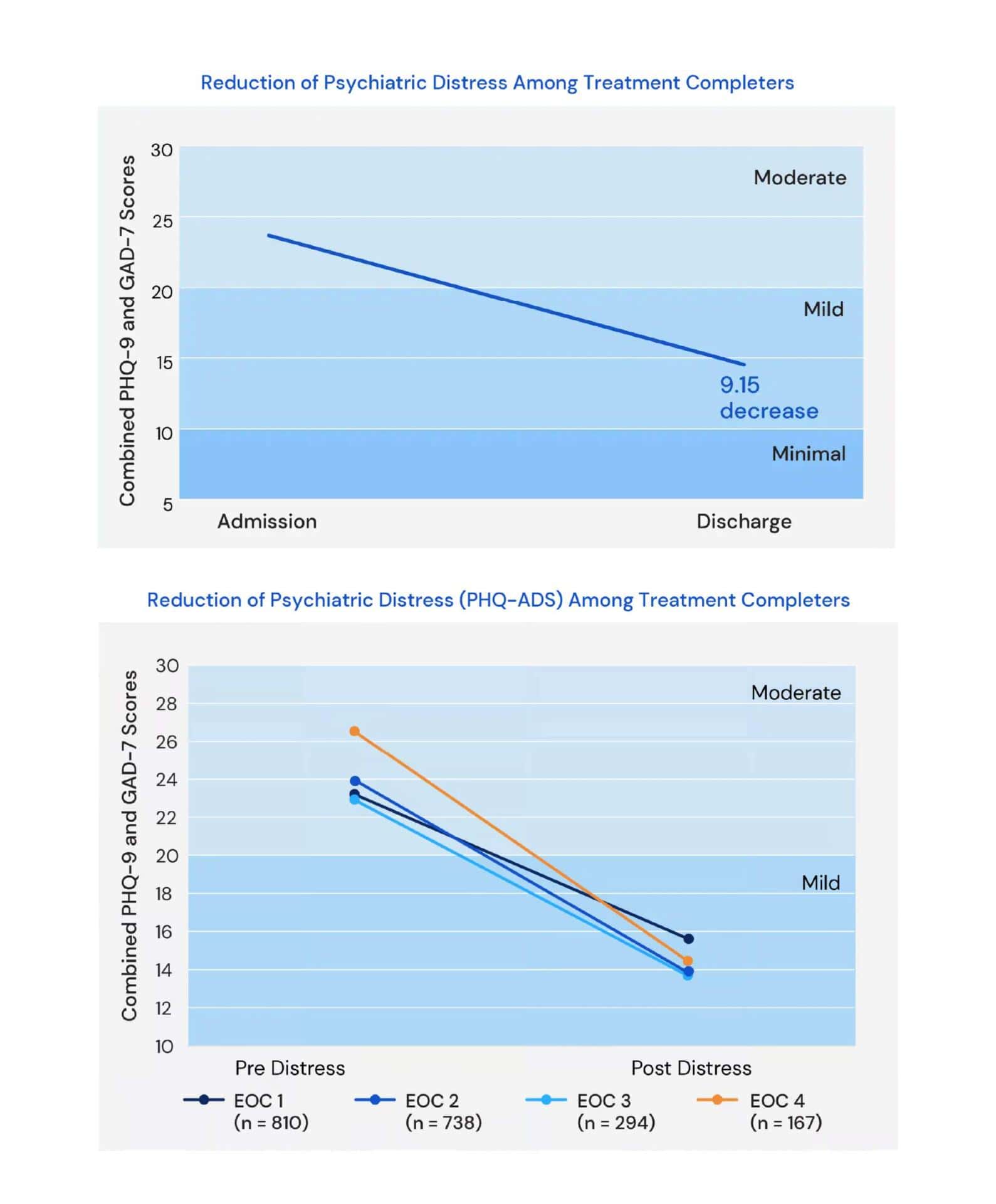
In a recent study, patients completed the Patient Health Questionnaire for Anxiety and Depression at the start and end of their treatment. The results showed a significant reduction in psychiatric distress that exceeded the benchmark.
Those who continued, reported greater gains. Psychiatric distress decreased significantly whether patients completed one, two, three, or four episodes of care. Those who continued their treatment journey reported greater overall clinical improvement.
At Sandstone Care, we understand that going into treatment is not something done on a whim. Which is why we track our outcomes closely, so you can feel confident that treatment is truly a step towards a better life.
Evidence-based therapies (EBTs) use treatment modalities that have been proven effective through scientific research. They include Cognitive Behavioral Therapy (CBT), Dialectical Behavioral Therapy (DBT), and Eye Movement Desensitization and Reprocessing (EMDR), and more.
These modalities provide real, life-changing results that can help you get your life back on track.
Some additional benefits include:
The American Psychological Association created the policies for EBTs using the best research available. Studies have shown that these therapy treatments lead to longer-lasting results.
Since these kinds of treatments are scientifically proven to be more effective, the chances of relapse are less likely, which means less money spent on future treatments.
EBTs require specialized training in the different kinds of therapies, which means you are guaranteed qualified, verified therapists are in charge of your care.
EBTs are safe and proven treatments, so you can feel confident that your recovery is not left up to chance. Your mental health assessments and preferences will determine which EBTs are used in their treatment plans.
“They were so friendly and knowledgeable always willing to help and adjust to the needs of the people in their care. If you need help do not hesitate you will not regret it!”
Our scientifically-backed and evidence-based treatment process continues to earn national praise and foster relationships with the following:
FAQS
Check out our selection of frequently asked questions — or call us to ask us today.
Coming in for a substance use treatment assessment is your first step towards getting the right kind of treatment. Our assessments give us a clearer understanding of your needs, enabling us to tailor a comprehensive treatment plan that addresses your specific challenges.
No, we do not currently provide an intensive outpatient program (IOP) or partial hospitalization program (PHP) for adults (35+).
We do offer these programs at Sandstone Care rehab facilities, however, these residential and outpatient treatment services cater to young adults (18-35) and adolescents (13-17) only.
Detox is our only level of care for adults at this time.
If you experience withdrawal symptoms when you attempt to discontinue substance use, it is more than likely that you are suffering from drug addiction. In this case, you would benefit from the detox healthcare services at one of our inpatient drug and alcohol rehab centers.
However, the best way to know whether or not you would benefit from medical detox is to get a professional opinion. Our trained admissions team would be happy to speak with you about your needs, our accredited drug rehab centers, and your next steps.
The average length of stay is 5-14 days. Some of the factors that impact length of stay at our rehabilitation programs are:
Yes, we do accept insurance from private health insurance providers! Please complete our quick and easy Insurance Verification to see if we accept your insurance coverage. Please note that we do not accept Medicare or Medicaid.
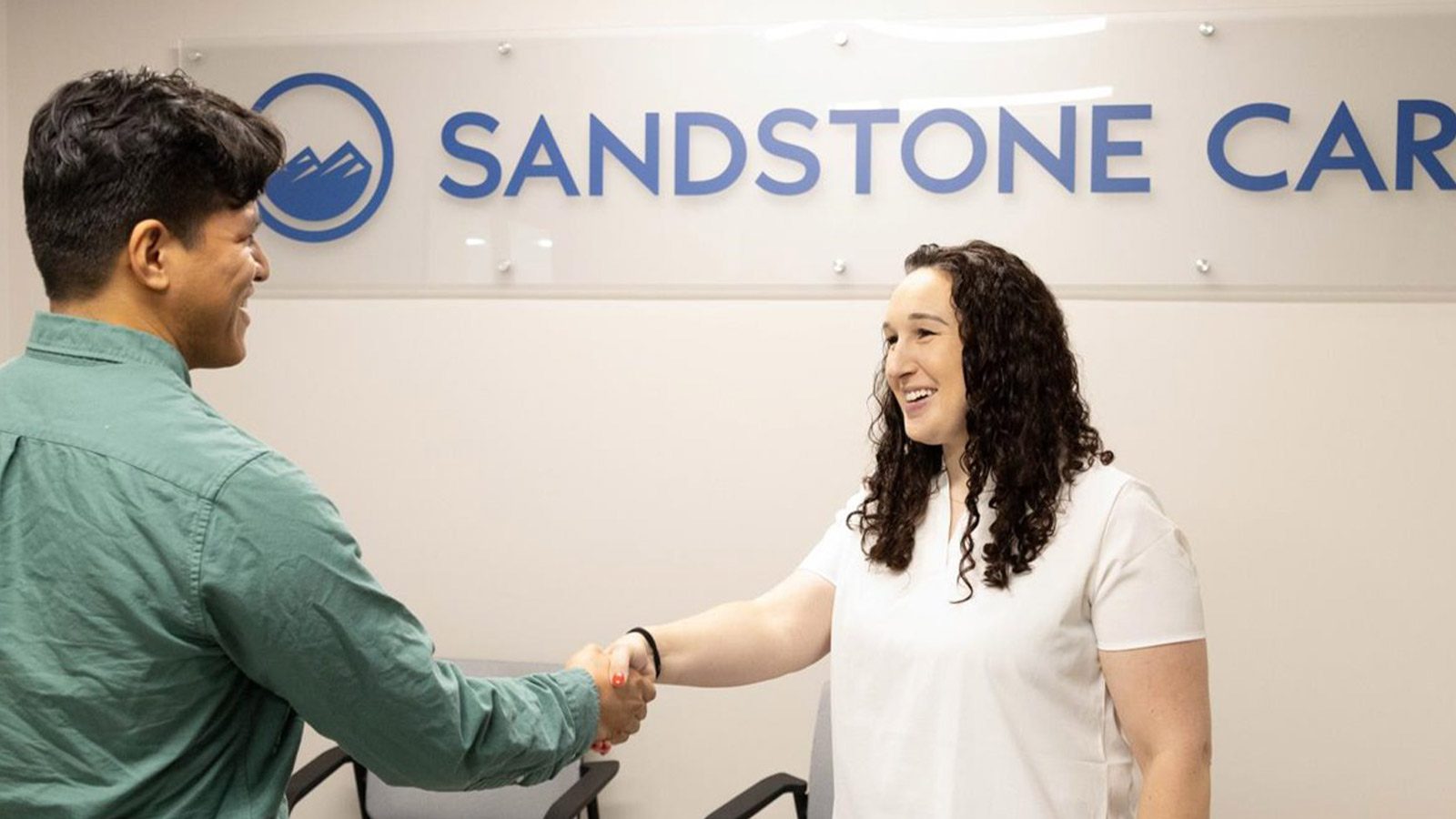
When you arrive to the Sandstone Care Detox & Inpatient Center, you will be greeted at the door by one of our staff members. A nurse and behavioral health technician will guide you through the admission and intake process which includes several assessments and initial evaluations. Then you will be shown to your bedroom and given some time to settle in before meeting other staff and clients in the facility.
Yes. Medication-Assisted Treatment (MAT) is proven to be effective in treating substance use disorders, especially in combination with evidence-based therapy and counseling. Our personalized programming is designed to learn your needs and goals so we can choose the best course of treatment for your specific challenges. By offering medically-supervised withdrawal from substances, we help our clients recover quickly and safely from drug or alcohol use.
We also recognize that not all situations call for MAT. Our medical team will evaluate your circumstances and determine what type of treatment is appropriate for you. Learn more about Medication Assisted Treatment (MAT) here.
Please note that Sandstone Care’s Detox locations are not methadone clinics.
No, family members will not allowed in the detox facility during your treatment, and we do not provide family therapy at the detox level of care. However, family members and friends are welcome to call our Detox Center to receive an update about their loved one.
During your stay at one of our detox centers, you will have access to your personal cell phone. However, you will not have access to your personal laptop. These will be kept in our secure storage area for the duration of your stay.
You can begin the process of getting treated at one of our Detox Centers by calling our admissions department.
If you or a loved one are experiencing an emergency mental health crisis, please call the suicide prevention crisis line at 988 or visit SAMHSA.gov.

We understand taking the first step is difficult. There is no shame or guilt in asking for help or more information. We are here to support you in any way we can.