Many people assume that detoxing from weed is easy because marijuana is often viewed as less harmful than other substances. In reality, regular marijuana use can lead to dependence, making weed detox more challenging than expected.
If you are wondering how to detox from weed, know that you are not alone. Cannabis is one of the most commonly used substances of abuse in the United States. Alcohol and tobacco products are the two substances that are used more frequently. However, rates of cannabis use and Cannabis Use Disorder (CUD) are increasing.
Like detoxing and withdrawing from other substances, there is no quick fix, miracle cleanse, or detox drinks that can remove THC from your system. The detox process takes time as your body works to eliminate tetrahydrocannabinol (the long name for THC) and its byproducts, stored as THC metabolites, from your system.
Whether you are seeking help for yourself or a loved one, if you’ve realized that weed is negatively impacting aspects of your life and are looking for help, we are here for you and your family.
This guide is here to help you understand the marijuana withdrawal process and what recovery and treatment options exist. Our goal is to help you feel empowered to make informed decisions about your health.
Key Takeaways
- Despite the misconception that marijuana is not addictive, many do become addicted and develop a substance use disorder.
- Withdrawal symptoms can occur 1-3 days after your last use, and many do experience some degree of cannabis withdrawal when they stop using.
- While healthy habits can support recovery, many people also benefit from professional support and evidence-based treatment.

Is Marijuana Actually Addictive? What the Research Says
Yes. The research indicates that regular use of cannabis can lead to marijuana addiction and other forms of drug abuse.
Why “it’s just weed” is a misconception worth correcting
Why “it’s just weed” is a misconception because people do become addicted to it.
Just like with other forms of substance abuse, a weed addiction can negatively affect relationships, employment, and daily life.
Addiction happens because marijuana contains cannabinoids, including tetrahydrocannabinol (THC), which affect the brain’s reward and motivation systems.
Up to one in 10 adults who use weed can become addicted, and in teens 18 and under, the rates are higher, with one in six who use weed potentially becoming addicted.
What marijuana use disorder looks like and how common it is in teens and young adults
A substance use disorder involving marijuana occurs when a person struggles to stop despite several negative consequences.
A marijuana use disorder is more common in those who start using cannabis as adolescents or teens and use it more frequently. Up to three in 10 will develop the disorder.
Signs of a cannabis use disorder can look like:
- Continuing to use marijuana despite it causing problems at school, work, or in relationships
- Trying to quit on your own unsuccessfully
- Increasing tolerance and needing more to get the same effect
- Craving weed strongly and thinking about it during the day
- Experiencing marijuana withdrawal symptoms when trying to stop
The difference between dependence and addiction
Dependence means the brain and body adapt to regular cannabis use.
If cannabis use is reduced or stopped, the person might experience withdrawal symptoms or negative effects.
Addiction means the person continues to use a substance despite the harm it is causing, and often has difficulty controlling their use.
Addiction often requires addiction treatment and ongoing support. Additional support is often needed because when there is an addiction, it can be challenging to stop thinking about the substance being used, and there are often negative effects on school, work, or health.
Dependence and addiction often occur together. However, they are not the same thing. A person can have a dependence on cannabis without being addicted, and a person can also have a cannabis use disorder without severe physical dependence.
For example, someone who uses cannabis with friends three nights a week might develop a tolerance to its effects and may even become physically dependent. However, if they are not experiencing significant cravings, loss of control, or negative impacts on their daily life, they may not meet the criteria for addiction.
However, if that same person begins:
- Craving cannabis
- Using it more often than intended
- Spending increasing amounts of time thinking about it or obtaining it
- Continuing to use it despite negative consequences
Then those behavioral patterns may begin to be consistent with a cannabis use disorder.
Weed Withdrawal Symptoms: What Your Body and Mind Go Through
When you go through the withdrawal process for weed, you will likely experience both physical and psychological symptoms.
The symptoms in the first week are often the most intense.
Physical symptoms: what to expect in the first week
Common physical symptoms to expect in the first week can include:
- Headaches
- Fatigue
- Sweating
- Appetite changes
- Digestive issues like nausea
- Sleep challenges or changes
Psychological symptoms: the ones that catch people off guard
The psychological and emotional effects of marijuana withdrawal are often harder than people expect.
They might include symptoms such as:
- Anxiety
- Depression
- Irritability
- Mood swings
- Restlessness
- Strong cravings
For someone with an underlying mental health condition, such as anxiety, withdrawal can feel especially intense.
How long do withdrawal symptoms last?
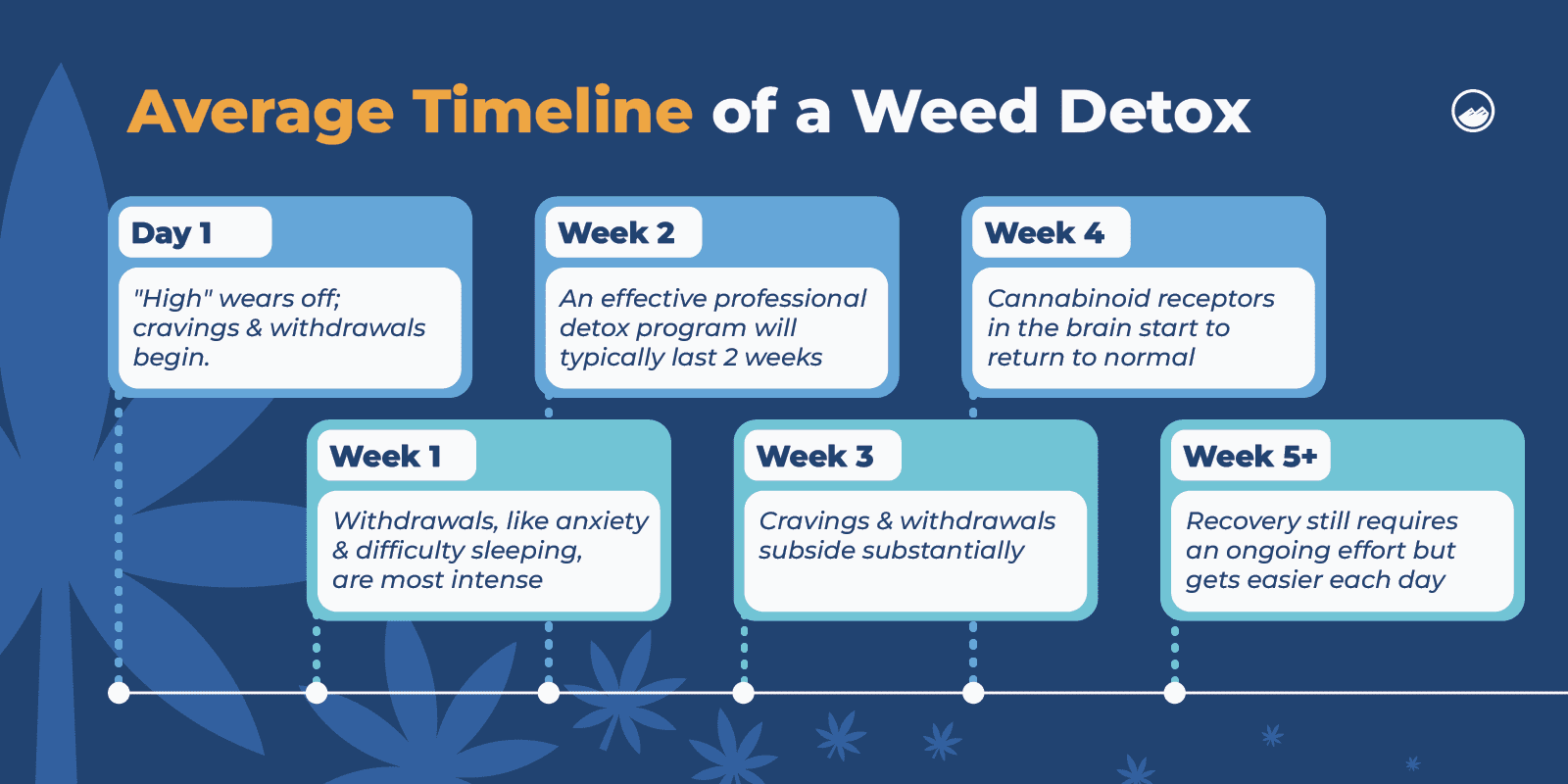
The exact timeline can vary, but generally withdrawal symptoms start the first one to three days after stopping use and peak during the first week.
During the first month, physical symptoms generally start to improve after a couple of weeks. It can often take longer to notice improvements in sleep and mood.
While most acute symptoms improve within the first few weeks to months, needing ongoing support is normal. Weed affects the brain’s reward centers, and it is normal to want to return to old habits when under stress or peer pressure.
Can You Detox from Weed at Home, and Should You?
Technically, you can often detox from weed at home.
Unlike withdrawing from some substances like alcohol or benzodiazepines, there usually aren’t serious side effects when coming off of weed.
When at-home detox is a reasonable option
For some people, an at-home marijuana detox can be reasonable.
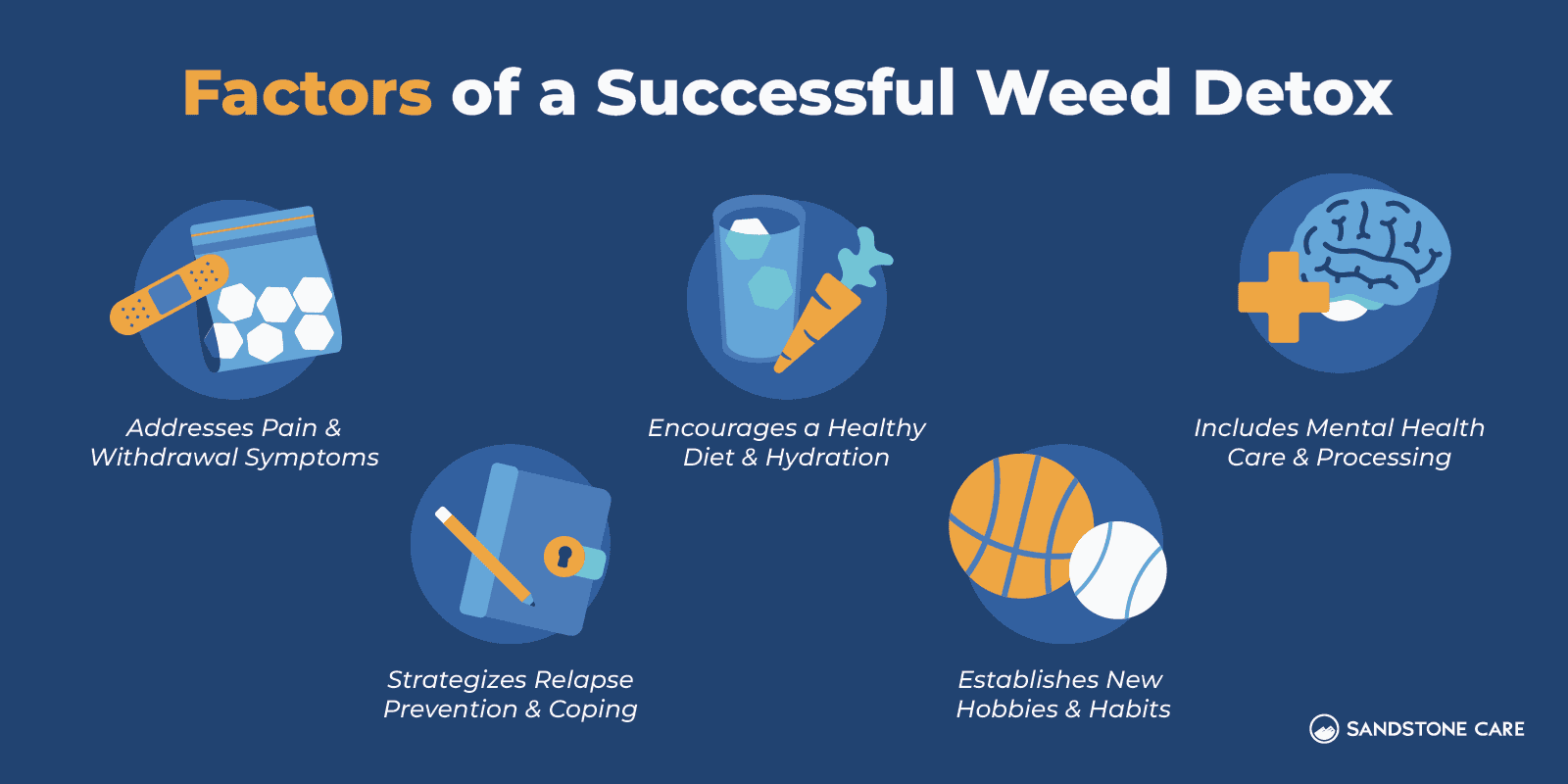
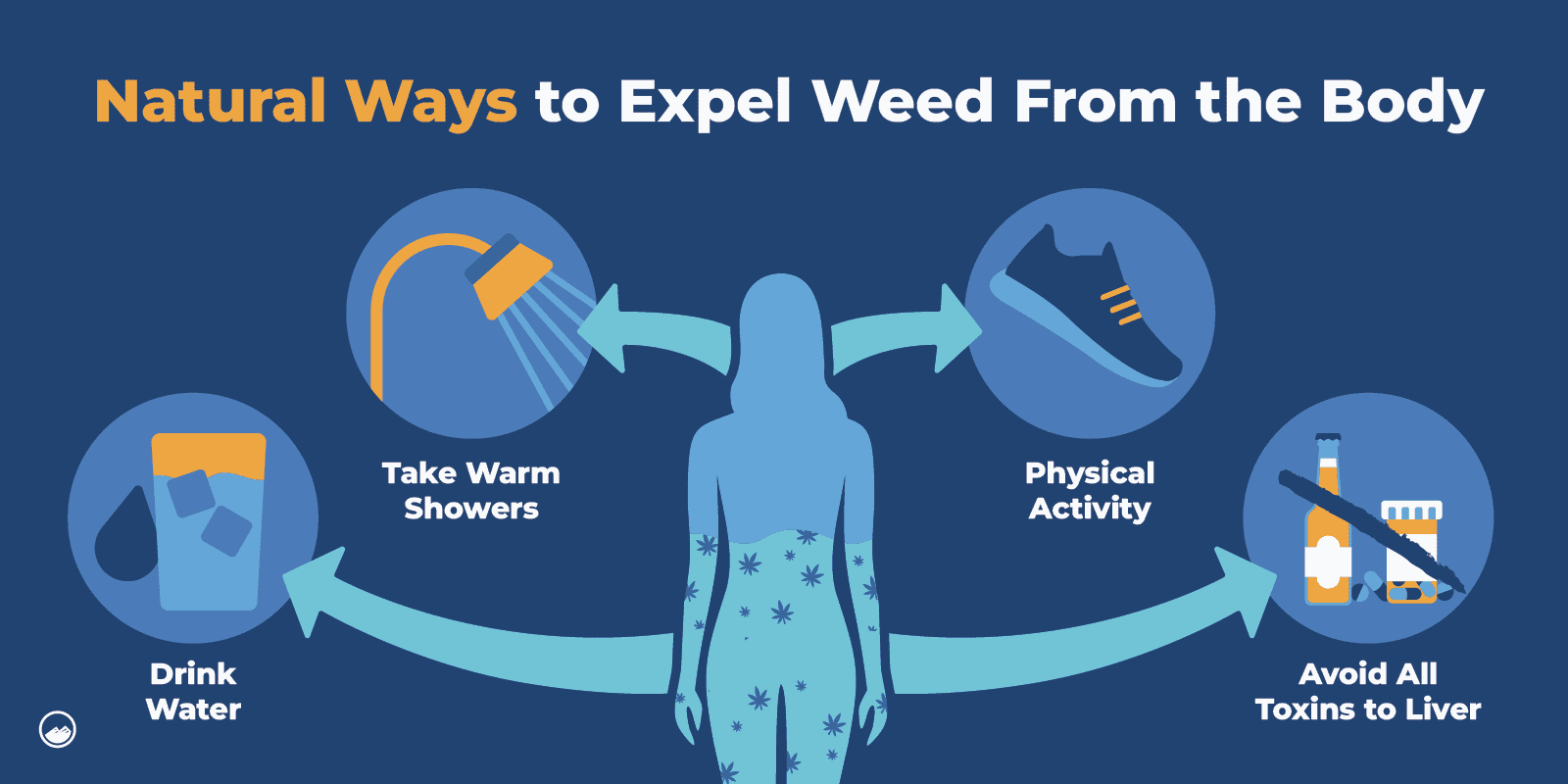
Often, focusing on basic self-care such as adequate hydration, good nutrition, and sleep can help people move through withdrawal.
Helpful strategies include:
- Staying hydrated and drinking plenty of water
- Eating a balanced diet
- Exercising (within moderation)
- Focusing on sleep hygiene
- Building a support network
It’s important to note that, among the items in the list above, your support network is key to your success. If you live in a home where your roommates, friends, or other family members are offering you edibles or vaping weed, and you can see and smell it, it will be harder to quit.
When at-home detox tends to fail, and why
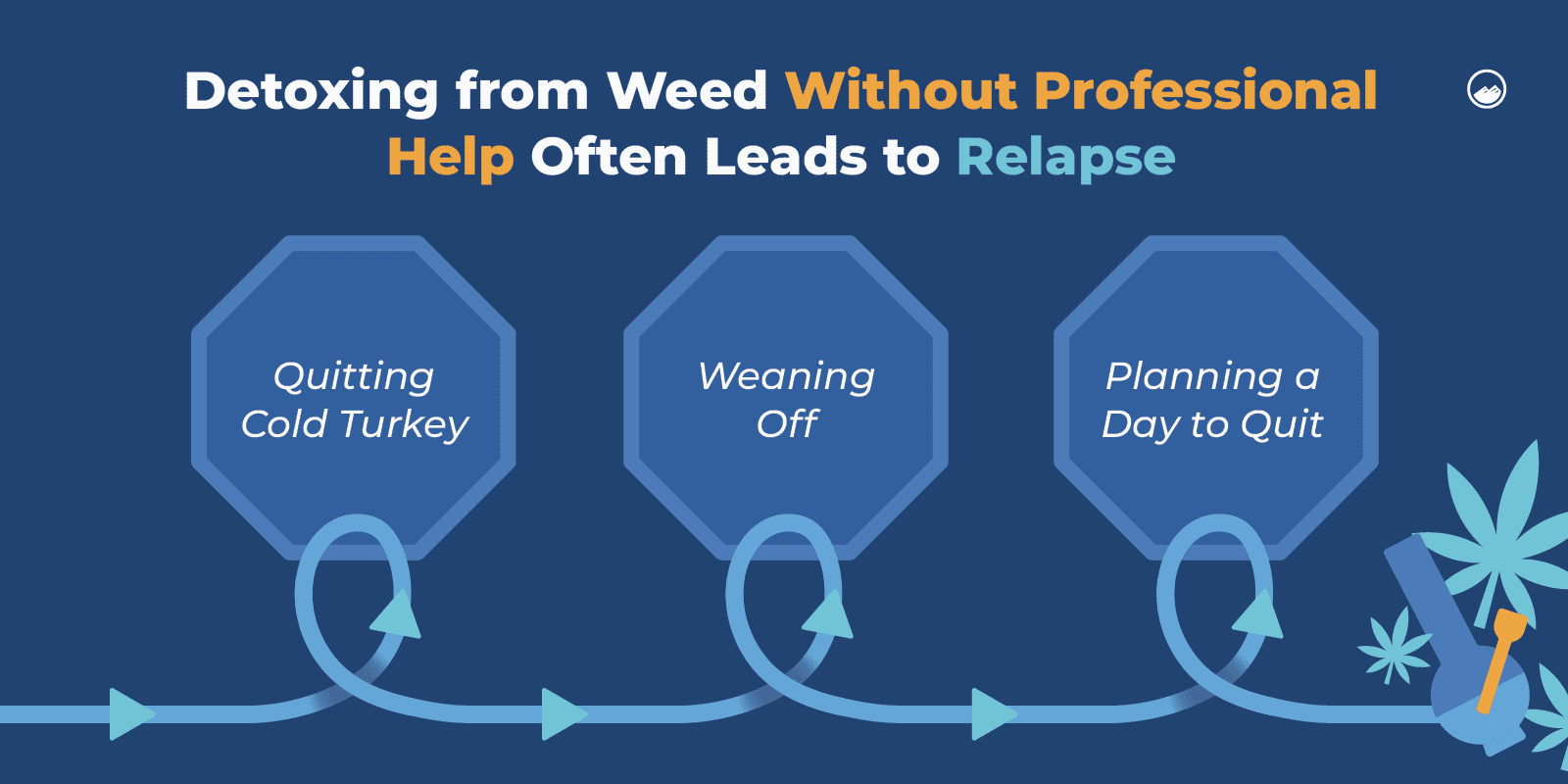
At-home detoxes sometimes fail because many people assume that detoxing from weed is easy.
In reality, many underestimate how difficult the emotional side of detoxing is. People become addicted to substances because they can make you feel good and can be a quick fix for daily stress or anxiety.
However, using substances isn’t a healthy coping mechanism.
Reasons people fall back into old patterns include:
- Relying on weed to cope
- Not having a practiced toolbox of healthy ways to cope
- Living with other people who use regularly
- Having an underlying mental health condition that isn’t being properly treated
- Being around weed in your daily life
The most common mistakes people make when trying to quit on their own
Common mistakes people make when trying to quit on their own include, but aren’t limited to:
- Trying to rely on detox products that offer instant results
- Looking for a supplement without seeking advice or help from a mental health professional
- Using THC detox drinks that are marketed to help clear THC from your system to pass a drug test
- Ignoring or being in denial about the symptoms of substance use
- Avoiding seeking professional help from a therapist or mental health provider
Sometimes people use weed to self-medicate or help them cope with stress. In these cases, working with a therapist and a mental health provider who can prescribe medications if needed is often helpful.
Need help deciding?
It is normal to be unsure about whether or not you need treatment or if you can do it on your own. It can also feel confusing deciding which type of treatment you need. If you have a healthcare provider or therapist, they are often a good place to start.
The team at Sandstone Care is also happy to walk you through all of the different outpatient and inpatient options available. Whether you are simply gathering information on available options or ready to start, call us at (888) 901-8848.
What professional marijuana detox and treatment actually looks like
Marijuana detox and treatment can look different depending on which setting you are in.
For example, some people choose inpatient care, whereas others may only need weekly check-ins with a therapist. There are other options, too, like intensive outpatient programs and partial hospitalization programs.
Why marijuana detox is different from alcohol or opioid detox (no medical danger, but still hard)
Unlike alcohol withdrawal, marijuana withdrawal is rarely life-threatening.
However, many underestimate how hard marijuana detox is and still benefit from professional support.
Professional support is particularly helpful if there are co-occurring mental health diagnoses, stressful life events happening, or if the person needs support navigating life without weed.
What outpatient treatment for marijuana use disorder involves
Outpatient treatment often includes:
- Individual counseling
- Family therapy
- Relapse prevention planning
- Peer groups and peer support
- Evidence-based therapies such as dialectical behavior therapy (DBT) and cognitive behavioral therapy (CBT)
IOP and PHP — when structured support makes the most difference
Sometimes structured support is necessary for recovery.
Regardless of the substance, sometimes people with a substance use disorder benefit from a structured detox program. This can look like an outpatient program, such as an intensive outpatient program (IOP) or partial hospitalization program (PHP).
IOP: An IOP program includes structured group therapy sessions for several hours, several times a week. IOP often includes one-on-one check-ins and sometimes family support. Sometimes people can still maintain school or work, and some programs, like Sandstone Care, are often online programs for even more flexibility.
PHP: A PHP program takes more time per week than IOP. It is generally the equivalent of a full-time job. Medication management is also often part of PHP programs, if needed. People typically need to take a leave of absence from school or work to attend PHP.
In some cases, inpatient treatment is also helpful. Additionally, if the underlying reason for substance use is a mental health condition like anxiety or depression, treatment that focuses on dual diagnoses (substance use plus another mental health condition) is often helpful.
At Sandstone, we specialize in dual diagnosis care and provide age-based residential treatment options for teens and young adults.
Detoxing From Weed as a Teen or Young Adult: What’s Different
What is different about teens and young adults is that their brains are still developing. Marijuana can have more significant impacts on the developing brain.
Why adolescent brains respond differently to marijuana and withdrawal
Brains continue developing well into a person’s 20s.
During this period of development, cannabis use can have a greater impact on attention, motivation, and emotional regulation. Additionally, cannabis use during this time period can have a permanent effect on growing brains.
How to have a conversation about stopping
Realizing that you or a loved one needs help is hard.
Consider reaching out to a family member, mentor, counselor, therapist, or another trusted person who can offer encouragement and support.
If you are considering quitting weed, having a support system that promotes accountability is essential.
What age-specific treatment looks like and why it matters
At Sandstone, we divide much of our treatment into age-based care.
This is because we recognize that a teen’s needs often differ from those of someone who has just graduated from college or is starting their career.
Programs designed specifically for teens or young adults combine professional help, age-appropriate therapy and groups, and family involvement. While you will find many similarities across all of our programs, they are structured to support the emotional well-being and recovery of the age groups they serve.
Ready to take the next step? Here’s how to start
If you are ready to take the next step, building a support system around yourself or your loved one can help.
At Sandstone Care, we offer several levels of addiction treatment, including:
- Outpatient counseling, such as IOP and PHP
- Family support and a parent support group
- Structured, inpatient detox programs
- Inpatient residential treatment centers that can also help with other underlying mental health conditions, such as anxiety or depression
Whether you are ready to start or looking for more information, give our admissions team a call at (888) 850-1890. We are here to help.
If picking up the phone feels too hard, we also offer an online chat during normal business hours that you can access from our homepage. You can speak with a real human, not just an AI bot.