
Understanding Purple Drank
What Is Lean?
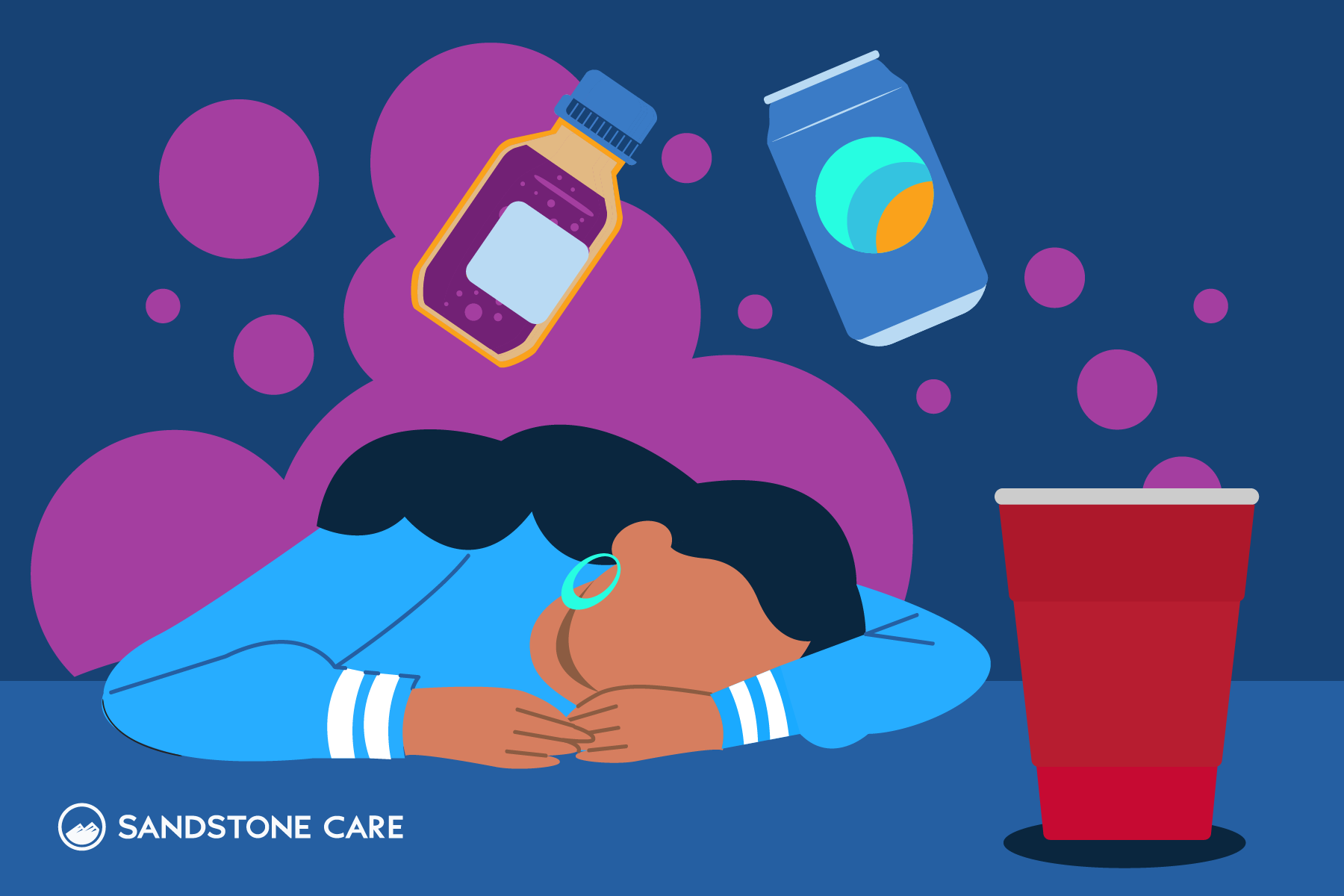
Lean drink, also known as purple drank, is a recreational drug made of codeine, soda, candy, and alcohol. It can make drinkers feel relaxed, but it is also highly addictive and dangerous.
The drink usually involves mixing prescription cough syrup that contains codeine (an opioid) and promethazine (an antihistamine) with a sweetened soda, such as Sprite.
Sometimes, manufacturers add candy like Jolly Ranchers or other hard candy for flavor. These also make the cough syrup taste less obvious and recognizable.
The name “lean” comes from the way that people who drink it end up slouching to the side or “leaning.”
Drinking Lean affects the body’s ability to function properly, especially when it comes to breathing. Codeine slows down the nervous system, making a person feel drowsy.
Different types of lean have evolved over the years, and it has gained popularity across different music circles since it first appeared in Houston in the 1960s.
One of the most well-known figures tied to Lean culture was DJ Screw, a Houston-based rapper and producer.
He pioneered the “chopped and screwed” style of hip-hop, a slowed-down, dreamy sound that “sounded the way lean felt.”
DJ Screw himself died of a codeine overdose in 2000, a fate that also took other artists, including Pimp C and Fredo Santana.
Since then, it has continued to rage in popularity among young people, despite its tragic consequences.
What Does Lean Feel Like?
When drinking lean, users often report feeling mild euphoria, relaxation, sleepiness, or like they’re “walking through a dream.”
They also may feel dissociated from their body, causing difficulty with motor-skills. Some people experience feelings of dizziness and blurry vision soon after drinking lean.
Time can also feel like it is moving in slow motion, which is tied to slower reaction times and slurred speech.
Since lean works by affecting the central nervous system, it slows down brain activity and causes sedative effects.
The sweet taste of lean can give people a false sense of safety, hiding the dangerous ingredients in the drink.
Because it tastes like candy, users are more likely to drink huge amounts without realizing the risk they are taking.
How Can I Tell If My Drink Was Spiked with Lean?
Lean has a strong taste and texture because of the cough syrup. If your drink was spiked with sizzurp you might notice:
- It has a strong grape, berry, or cherry flavor that overpowers the original drink.
- It leaves a bitter or medicine-like aftertaste, even with all the sweetness.
- Your mouth feels slightly numb or cool after drinking it.
- The drink feels thicker than usual, almost like it is coated in syrup.
- It looks cloudy or murky
- It is foamy or extra fizzy, especially if mixed with soda.
- There is grit or residue settling at the bottom
- The cup or rim feels sticky, which could be from the syrup.
If your drink tastes too sweet, feels thicker, looks strange, or has a strong fruity or medicine flavor, stop drinking it immediately.
If you start feeling unusually tired, dizzy, or confused, tell someone and seek medical help right away.
People around you may insist that it is a “safe amount,” or that it is “the safe kind of lean.”
There is no “safe kind” of purple drank.

Is this blog hitting close to home?
We’re here to help.
What Are the Different Names for the Lean?
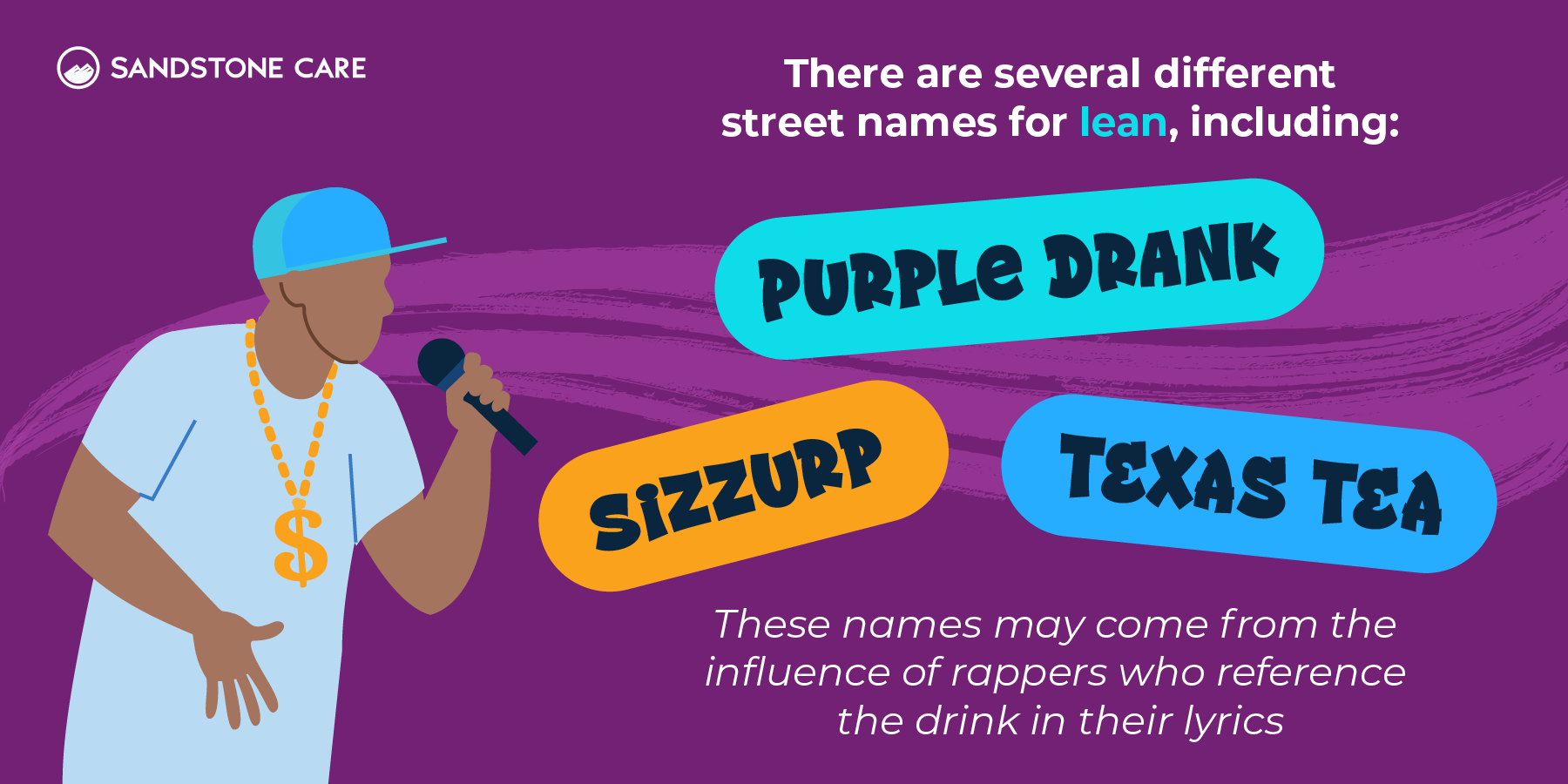
There are several different street names for lean, such as:
- Purple Sprite
- Dirty Sprite
- Purple Drank
- Sizzurp
- Texas Tea
- Cup of Lean
- Barre
- Tsikuni
- Drank
- Purple Jelly
- Purple Tonic
- Oil
- Wok
- Wockhardt
- Act
- Actavis
- Mud
- Grape Drink
- Syrup
- Tuss
- Big Moe
While it’s difficult to track all of the ways people may refer to lean, many of the terms come from the influence of rappers who reference the drink in their lyrics.
For example, lean first originated in Texas, which is where the nickname “Texas Tea” probably comes from.
Other nicknames refer to the taste of the drink, its consistency, and how it’s made. For example, the nicknames “Purple Sprite” and “Dirty Sprite” likely refer to the color and ingredients in the drink.
How To Make Lean?
The common ingredients of lean include prescription codeine cough syrup and promethazine, mixed with a soft drink (often Sprite) and sometimes candy.
There are several different ingredients in lean, and part of what makes the drink so dangerous is that its ingredients are often improvised based on whatever the person making it has on hand.
There is no way to verify what’s in the drink.
Other possible ingredients that can make lean more dangerous include:
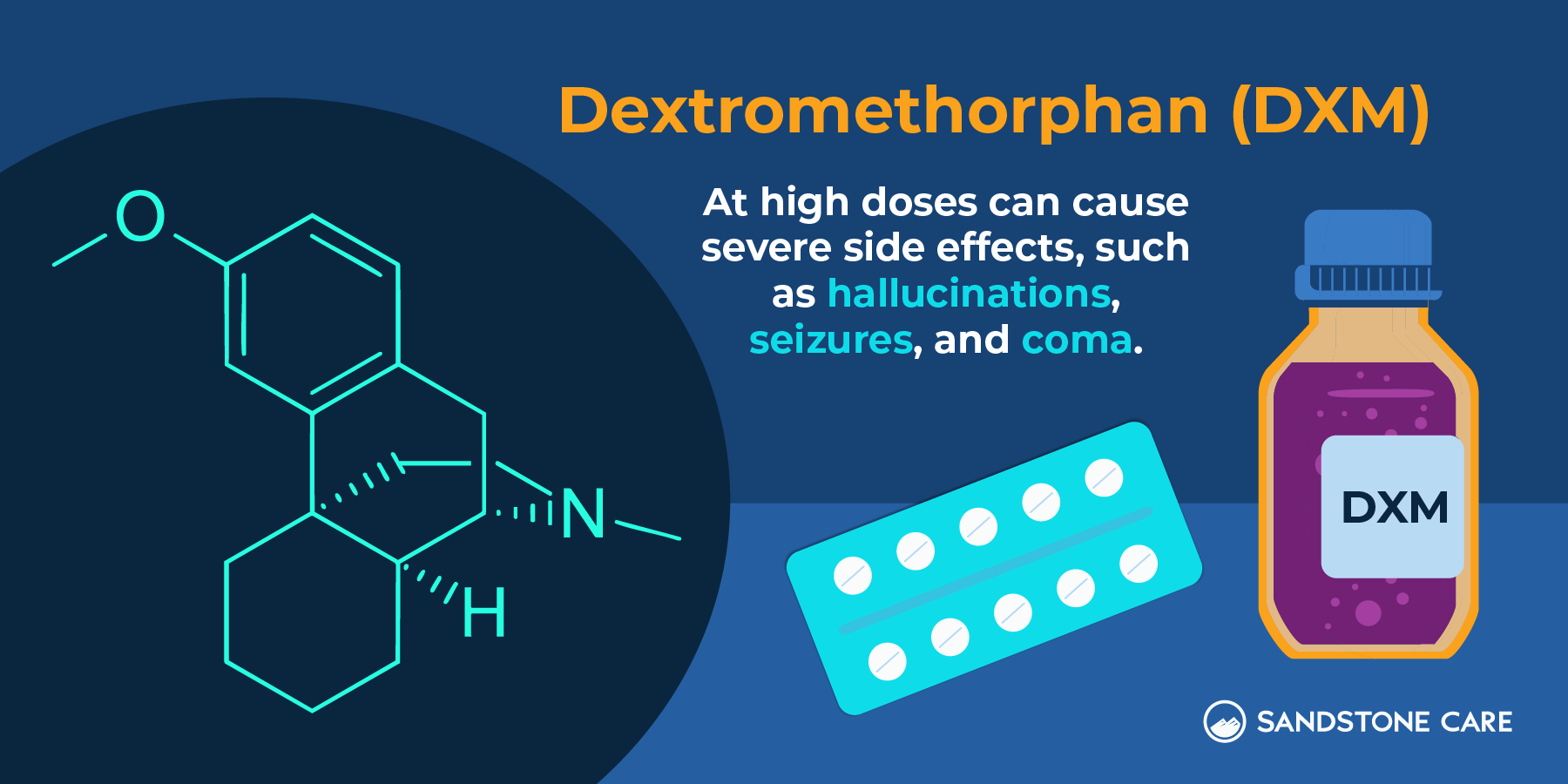
- Dextromethorphan: Some people substitute over-the-counter medicines that contain dextromethorphan (DXM) instead of codeine. DXM is a cough suppressant and, at high doses, can cause severe side effects, such as hallucinations, seizures, and coma.
- Fentanyl or alcohol: Other formulations of lean may contain fentanyl or alcohol.
- Unknown ingredients and amounts: Due to the drink’s manufacturing process, there is no standard dose or method for measuring the amount of codeine, promethazine, or other ingredients in the mix.
- Overdose and long-term health risks: Since there is no way to verify what is in the drink and how much, when people are drinking lean, they run the risk of an overdose, developing an addiction, and other long-term health consequences.
Types of Lean
What Are the Types of Lean?
The different types of lean include:
- Traditional lean: This version is the traditional formulation that is made with codeine and promethazine cough syrup, soda, and candy.
- Over-the-counter lean: This version uses dextromethorphan (DXM) instead of codeine. While it is often weaker than traditional lean, it can still be harmful in high doses and cause significant side effects.
- Fake lean or fent lean: Some versions of lean contain fentanyl or other opioids. These versions are especially dangerous because even small amounts of fentanyl can be fatal.
- THC lean: This version uses cannabis infused syrups or other versions of THC. Some may consider this version a “safer” alternative because it doesn’t contain an opioid. However, it can still cause impairment and other harmful side effects.
How Can You Tell When It Is Fake Lean?
It is almost impossible to know if lean is “fake lean” without chemical testing.
A couple of hints that the lean is fake lean include packaging that looks homemade (as opposed to a prescription label with codeine/promethazine) or the lean being sold under the name “fent lean”.
There’s no formal way of making lean, so it is impossible to verify exactly what you are drinking.
Fentanyl may be used over codeine because it is a far more powerful opioid and significantly cheaper to obtain.
Lean Effects
What Does Lean Do to You?
Lean slows down the central nervous system, which produces a type of drowsiness that can feel dreamlike. Some types of lean may also create a sense of euphoria.
However, because lean acts as a sedative, it comes with depressant side effects.
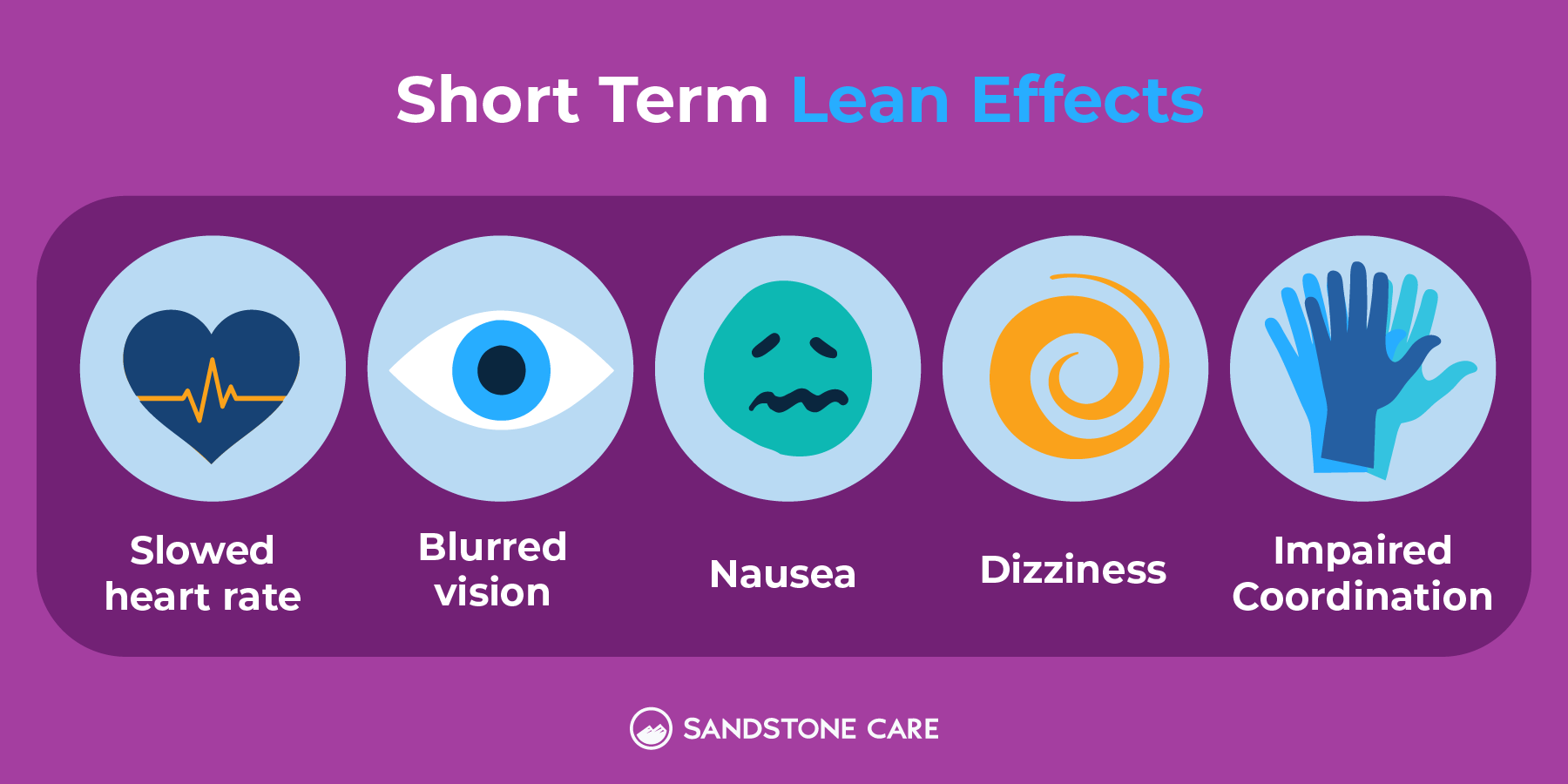
Short-term effects can include symptoms such as:
- Slowed heart rate
- Blurred vision
- Nausea
- Dizziness
- Impaired coordination
An overdose or high doses can cause severe respiratory depression. This is where the breathing rate becomes dangerously slow.
How Long Does It Take for Lean To Kick In?
It depends on the formulation, but generally lean takes around 30 minutes or so to kick in, with the high lasting several hours.
However, side effects and withdrawal symptoms may last much longer.
What Are the Physical Side Effects of Sizzurp?
There are several side effects of lean, including:
- Drowsiness
- Slurred speech
- Loss of motor control
- Constipation
- Slowed heart rate
- Nausea and vomiting
- Memory problems
At higher doses, it can weaken the brain’s ability to send signals that keep breathing steady. This is what makes overdose so dangerous—if breathing slows too much, it can stop completely.
Lean is highly addictive, and over time, the body depends on it to feel normal. Quitting can cause withdrawal, with nausea, sweating, anxiety, and cravings.
Long-term use strains the liver, raising the risk of failure. It also weakens the heart, leading to irregular beats or heart failure. The brain suffers too, making it harder to think clearly, process emotions, and focus.
Drinking lean is like swimming out into deep water. It might seem easy to float at first, but soon it becomes difficult to stay above the surface.
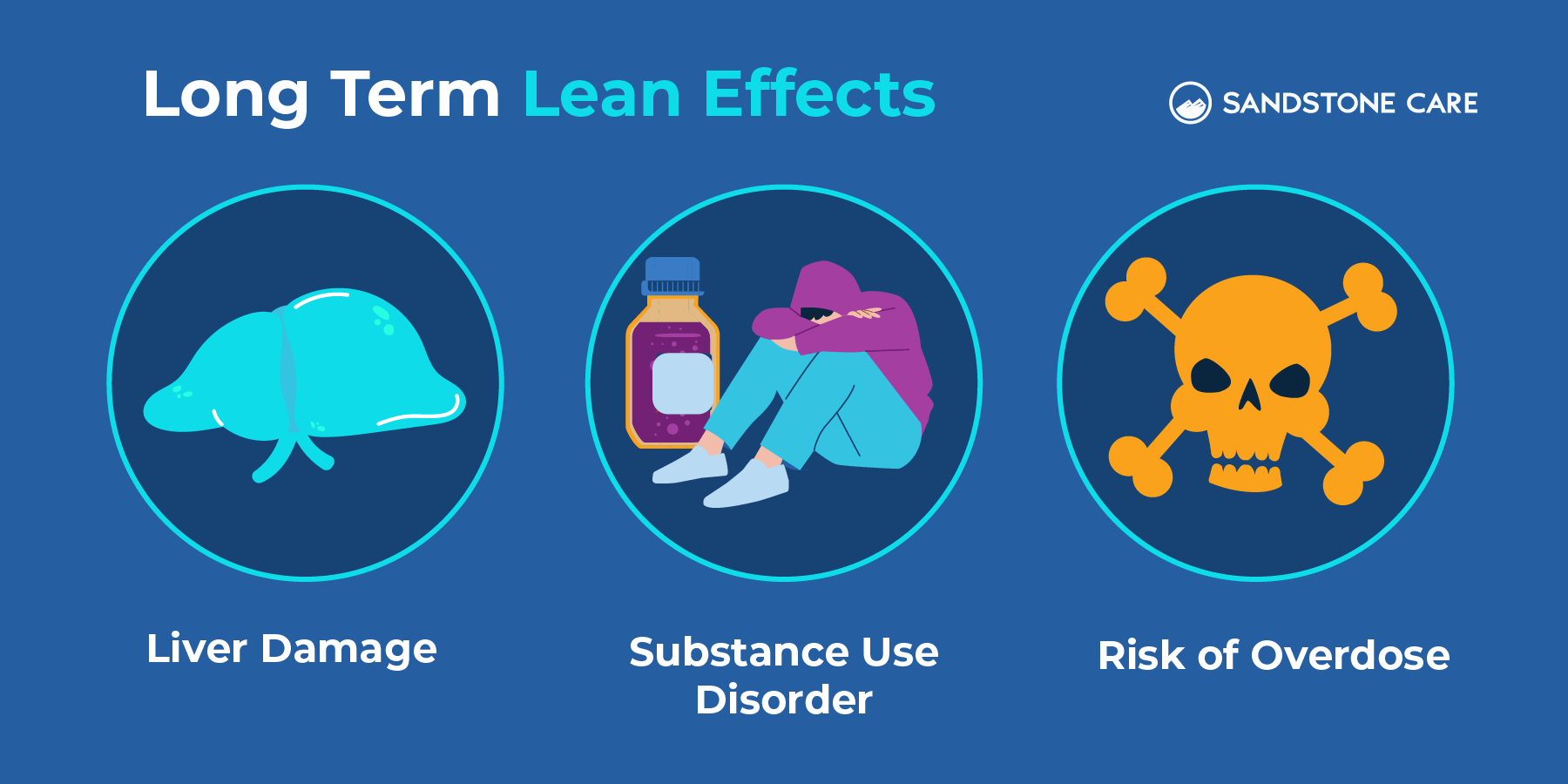
Long-term substance abuse can lead to additional physical side effects, such as:
Liver damage: This can be especially true if an acetaminophen-based cough syrup is used in high enough doses or if an acetaminophen-based cough syrup is used with alcohol.
Substance use disorder: Ingredients in lean, such as opioids (e.g., codeine and fentanyl), can be highly addictive. Once addicted, the person may experience withdrawal if they try to come off of lean or lose access to lean.
Risk of overdose: The risk of a fentanyl overdose is especially dangerous. However, other ingredients can cause an overdose, too, such as DMX.
How Long Does Lean Stay in Your System?
The different ingredients stay in your system for differebt lengths of time, with codeine typically having the shortest half-life and promethazine the longest.
Half-life refers to how quickly your body breaks down and uses a drug. Codeine may only remain in your system for a few hours. Promethazine, however, has a much longer half-life of up to 16 hours, and stays in your system longer.
Risks of Lean
Is Lean Dangerous?
Yes, lean is dangerous for several reasons:
- It combines an opioid with a strong antihistamine, which can increase the risk of overdose.
- It is often mixed with unknown substances and may contain more potent opioids, such as fentanyl.
- It can impair judgment, leading to accidents and increased risk of injury.
- It is possible to develop a lean addiction and long-term mental health conditions, such as substance use disorder, from drinking lean.
Codeine is the main active ingredient in Lean. It is an opioid, meaning it attaches to opioid receptors in the brain and spinal cord to block pain.
Codeine also slows down the nervous system, which controls breathing, heart rate, and other vital functions. In high doses, this can cause slow or stopped breathing, which is extremely dangerous.
People around you may insist that it is a “safe amount,” or that it is “the safe kind of lean.”
There is no “safe kind” of purple drank.
The effects become even stronger when mixed with promethazine, an ingredient that increases drowsiness by blocking histamine receptors in the brain.
Since there is no way of knowing for sure the amount codeine or alcohol spiked into your drink, it is impossible to know how dangerous the situation is.
Is Cough Syrup Abuse Risky for Teens?
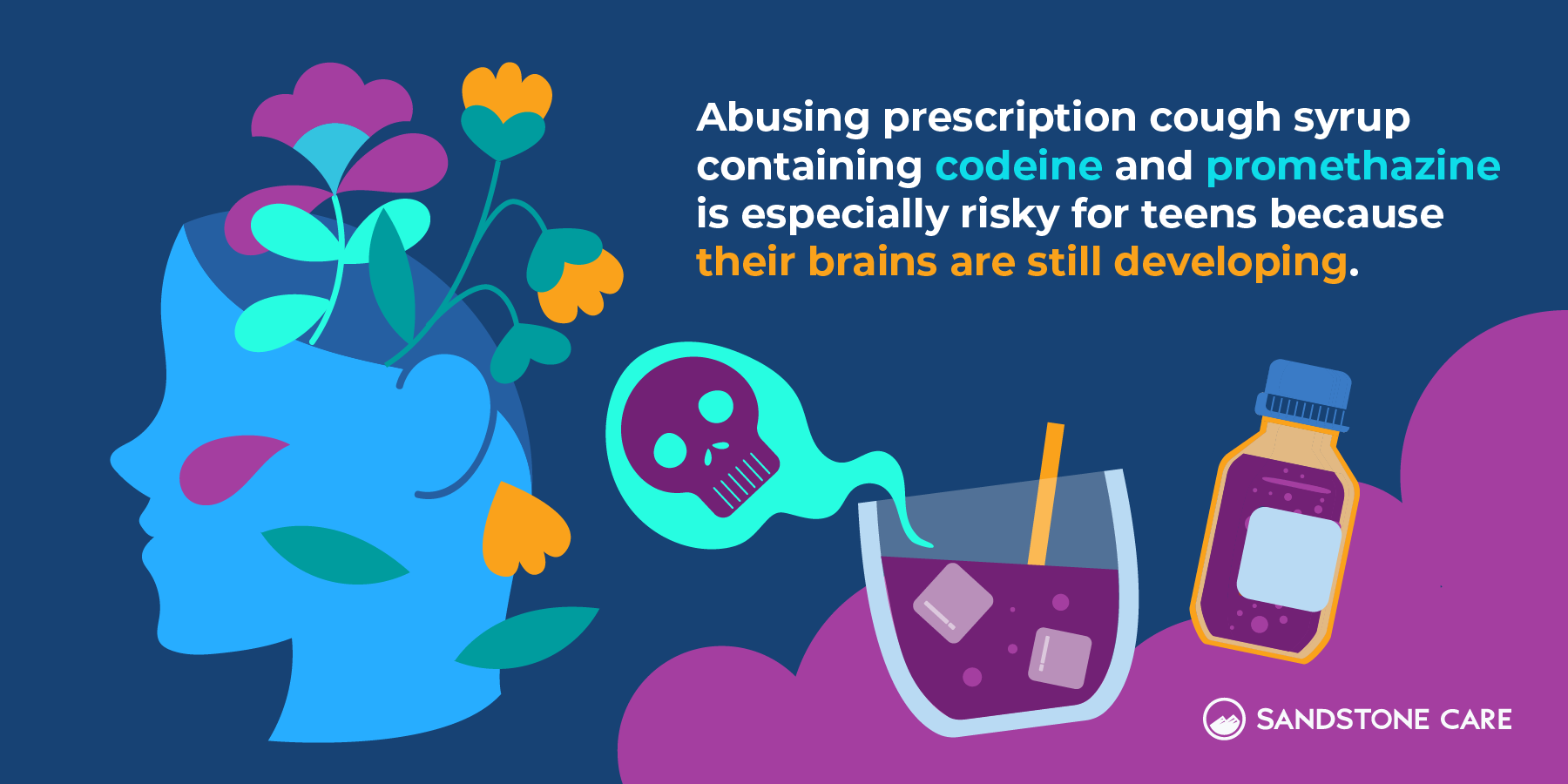
Yes. Abusing prescription cough syrup containing codeine and promethazine is especially risky for teens because their brains are still developing.
Young people may be drawn to Lean because of its sweet taste, relaxed effects, and popularity in music and pop culture.
Since the brain is still developing into the mid-20s, teens and young adults are more vulnerable to addiction and long-term damage.
Is Lean Illegal?
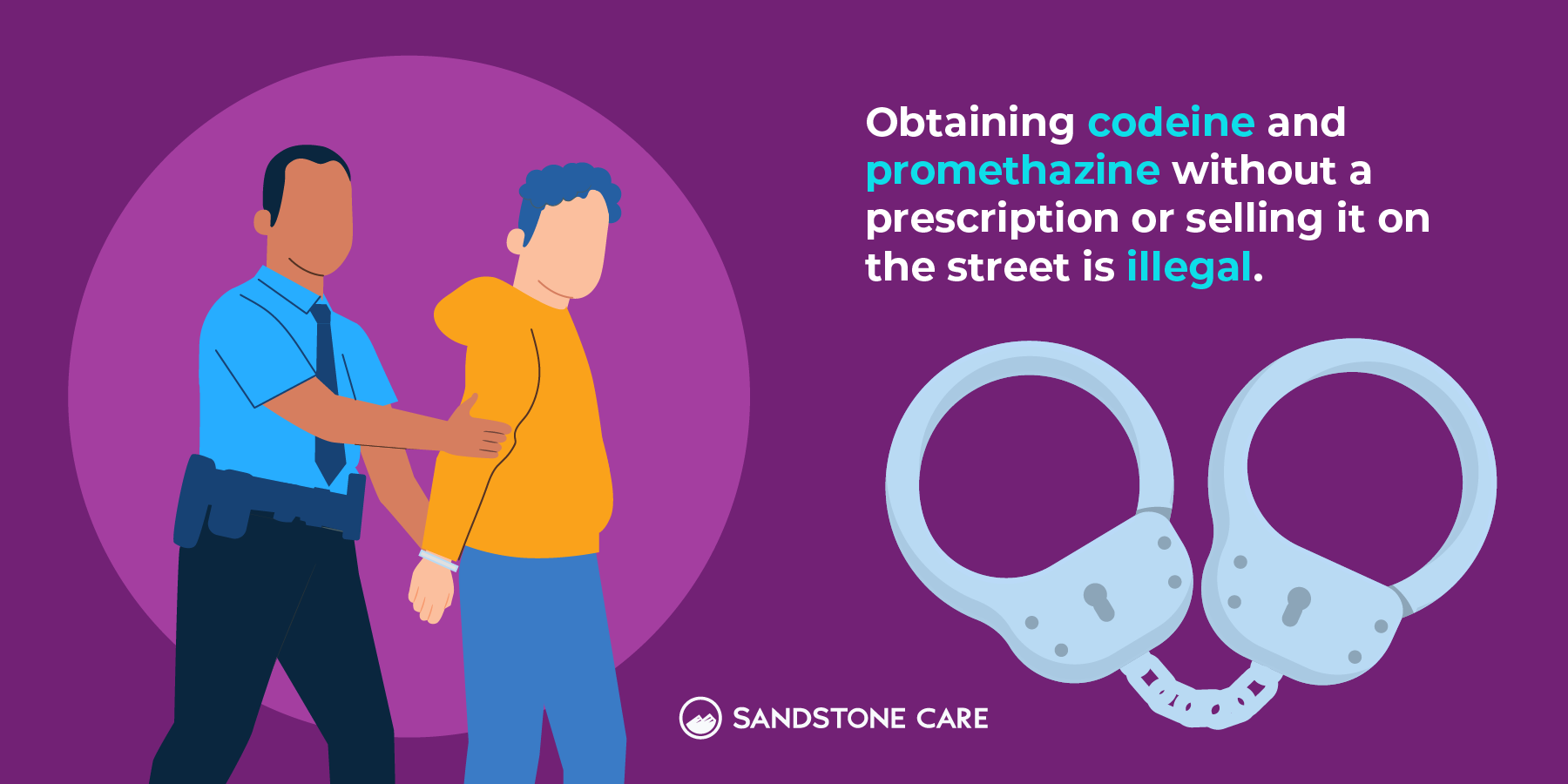
Technically, yes—prescription cough syrup containing codeine and promethazine is a controlled substance.
So, obtaining it without a prescription or selling it on the street, even if you have a prescription yourself, is illegal.
Technically, if you have a prescription from your health care provider and choose to mix the recommended dose with Sprite and hard candy, that may not be illegal. However, to achieve a high, higher than prescribed amounts are typically needed.
In many areas, law enforcement monitors street drugs, including lean, closely, due to the rising concerns about opioid misuse.
Can Lean Kill You?
Yes. Opioids such as codeine and fentanyl, and promethazine, can cause something called respiratory depression.
Respiratory depression reduces your brain’s ability to communicate to your body to breathe, resulting in you not breathing enough or at all.
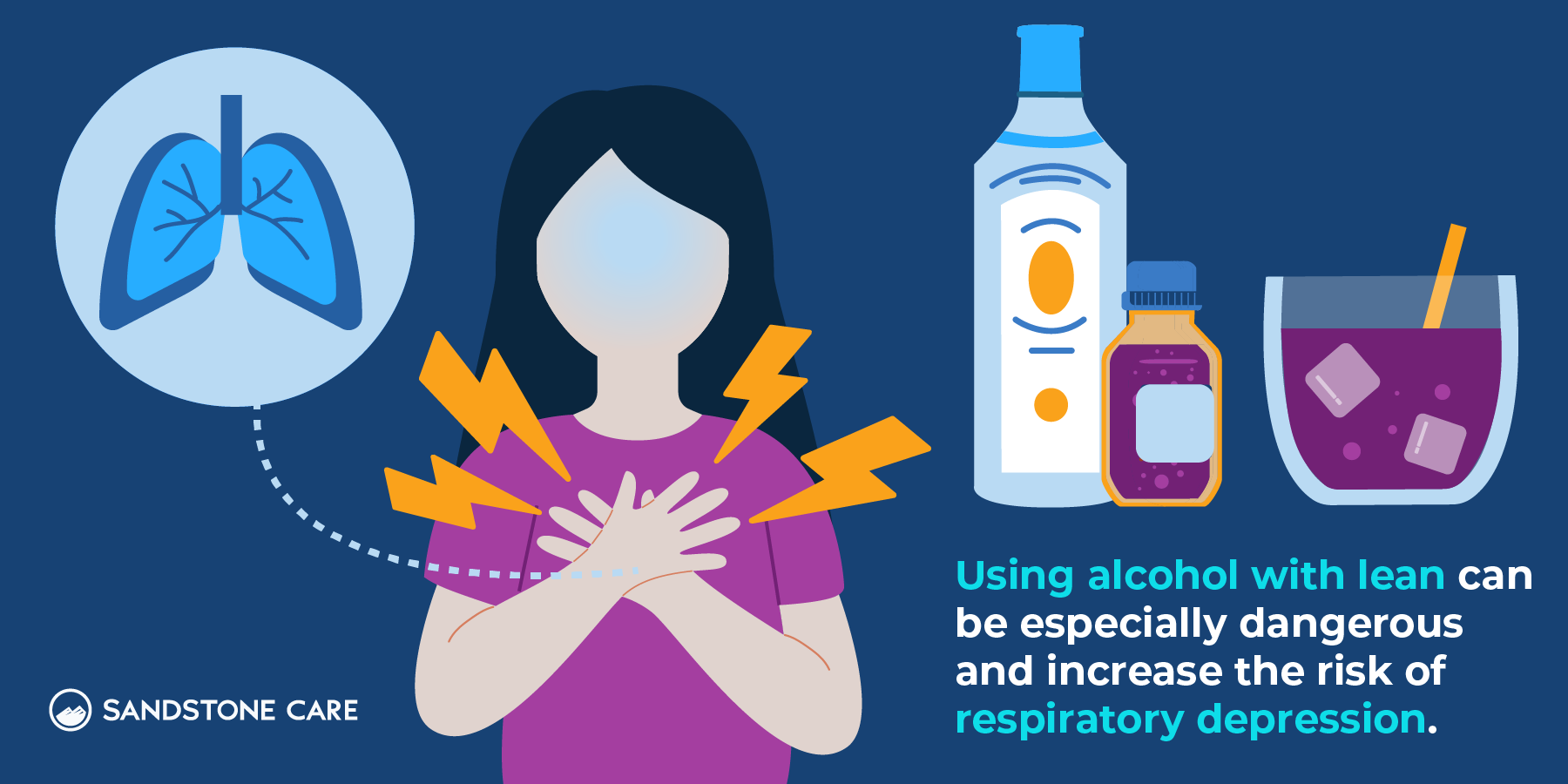
Alcohol use with lean can be especially dangerous. If alcohol is mixed with lean, it can dramatically increase the risk of respiratory depression because alcohol is also a respiratory depressant.
Treatment for Lean Addiction
Is Lean Addictive?
Most versions of lean contain an opioid, typically either codeine or fentanyl, both of which are highly addictive.
With repeated use of lean, the brain becomes dependent on it, and users may experience intense cravings and withdrawal symptoms if they stop using.
Is There a Treatment for Cough Syrup Abuse?
Treatment for cough syrup abuse is available, and addiction treatment can consist of either inpatient or outpatient treatment, depending on your needs.
Addiction treatment may include:
- Detox: For many, this is the first step and includes medically supervised withdrawal from cough medicine to manage symptoms safely. Treatment varies by the facility and may range from five to 21 days.
- Inpatient treatment centers: After detox, those who require additional, ongoing support may attend a residential recovery center.
- Outpatient programs: There is a range of outpatient treatment options, ranging from partial hospitalization programs (PHP), intensive outpatient programs (IOP), and other outpatient groups related to substance use.
- Individual therapy: Many who experience substance use find individual therapy helpful for addressing underlying mental health issues, along with substance use, 1:1 with their therapist.
- Medication: Several different medications are available to help stabilize someone’s mood and ease cravings.
It is common for people who have a substance use disorder also to have another co-existing mental health condition. Facilities known as dual diagnosis programs are especially designed to help people with mental health and substance use disorders.
How To Find Treatment for Lean Addiction?
If you or a loved one is addicted to lean and seeking treatment, ask your mental health provider (if you have one) or primary care provider for recommendations of SUD treatment centers.
You may be able to find a local treatment center specializing in SUD and opioid addiction. Consider both inpatient and outpatient treatment options, depending on your needs.
With the right treatment programs, recovery is possible.
Sandstone Care is here to help and support those with substance use and those experiencing mental health challenges related to addiction. Treatment is available in both residential and outpatient settings nationwide. Call (888) 850-1890.