
Meaning of a Quarter Life Crisis
What Is a Quarter Life Crisis?
A quarter-life crisis happens when the pressure to hit major life milestones and find your identity as a young adult leaves you feeling anxious, stuck, and overwhelmed by the future.
Entering a new stage of adulthood can feel like you’re behind before you even get the chance to start.
For the first time in your life, “what you are going to be when you grow up” is no longer a fun, childhood question. Many young adults instead, feel exhausted and overwhelmed trying to make a barrage of high-pressure choices.
Maybe your parents were further ahead when they were your age, maybe your friends are further ahead of you now.
Questions about career, finances, and long-term relationships are constantly being thrown at you, which can make you feel panicked that you don’t have everything figured out right now. Or worse, that you’re already trapped, hurtling towards a future you never wanted for yourself.
This constant pressure can cause sleep problems, burnout at work, strained friendships, and all sorts of mental health symptoms that make the situation feel even worse.

At What Age Does a Quarter-Life Crisis Happen?
A quarter-life crisis usually occurs during a person’s early 20s to mid-20s. It can also happen during your late 20s to early 30s.
There is no specific birthday that launches a quarter-life crisis, but most people find that they start to feel more stressed around their identity when they approach certain milestones, like graduation or marriage.
This may also change depending on where you live, what your family and cultural expectations are, and what your peers are doing around you.
Is It Normal To Have a Quarter-Life Crisis?
Yes. It is perfectly normal for young adults to have concerns about their identity, especially as they transition from their twenty-somethings into adulthood. However, if that uncertainty starts to make it difficult for you to function in your day-to-day life, it may be a sign of something more serious.
You are not alone in this experience, but just because something is common, does not mean it will always go away on its own.
Quarter-life crises can often trigger symptoms and mental health issues that were previously buried.
This makes it a critical moment to stay on top of your emotional health before it becomes too overwhelming to handle.
Mental health professionals who focus on age-specific care, like those at Sandstone, are trained specifically to help you adjust to your new stage of life in a healthy way.
What’s an Example of a Quarter Life Crisis?
There is no official diagnosis for quarter-life crisis, but many people experience stress around growing older when they start to regret or rethink major decisions, like career paths or relationships.
One example of a quarter-life crisis is pursuing graduate school and graduating in your late twenties, only to realize that your studies did not make you feel as fulfilled as you thought they would.
For example, you may have worked hard, studied to become a lawyer, and spent years in school.
However, the job was not what you imagined, you no longer want to practice law. You can’t sleep, you don’t want to socialize with anyone, and you feel like you can’t breathe until you change careers entirely.
It is crucial to learn skills that can help you regulate these emotions, so you can be sure that you are making decisions clearly and not out of panic or fear.
Other people find that they have a quarter-life crisis when they get engaged or are expecting a child. It can feel like you are aging too quickly, or that you are losing some part of your life behind you.
Sometimes you may feel like you didn’t “get a chance” to live your young life as fully as you wanted to, and now it is already too late.
These are normal feelings, but if they are not addressed, they can lead to problems in relationships and trigger symptoms of depression, anxiety, or other mental health conditions.
Quarter Life Crisis Symptoms
What Are the Symptoms of a Quarter-Life Crisis?
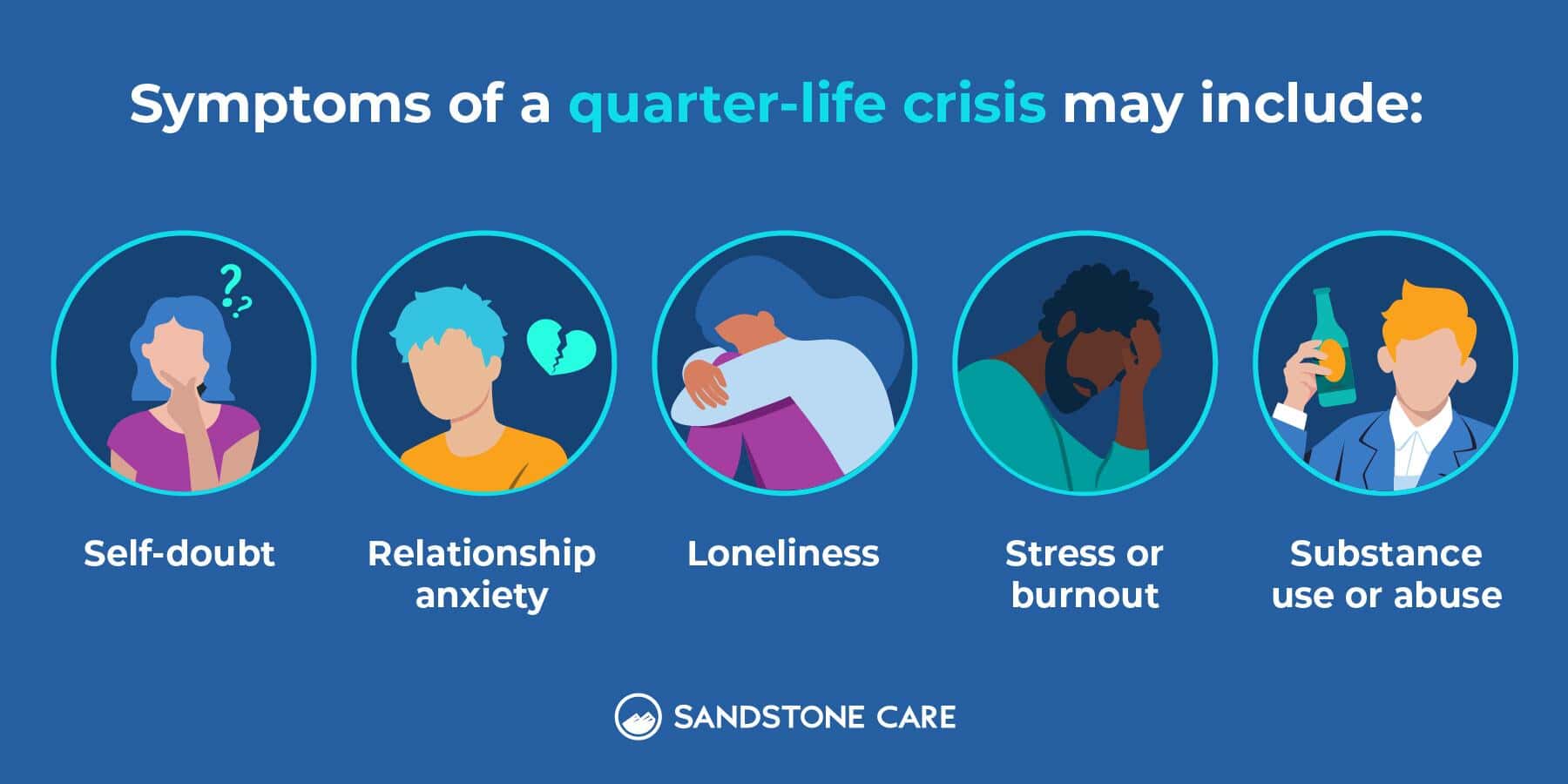
The symptoms of a quarter-life crisis are different for everyone, but common ones may include:
Self-doubt: You may constantly worry that you are not living up to your full potential.
Relationship anxiety: You may question your romantic relationships, recent or impending breakups, your friendships, and the social groups you spend the most time with.
Stress or burnout: Depending on how distressed you are by your quarter-life crisis, you may experience high levels of stress, which can cause burnout. It can be stressful to juggle your personal life, career, and finances in a job you feel uncertain about.
Desire for change: You may feel a strong drive to start over in a new city, a new career, or a new relationship to escape your current situation and make dramatic changes to your life.
Confusion about career path: While you may desire a change in your career, you may be unsure what that change should be or hesitant to make the change. You may feel confused, trapped, and like you have already “sold out.”
Loneliness: You might have a large social circle, but feel isolated due to the pressure of social comparisons in real life and on social media.
It’s common to feel like those around you have everything figured out, while you don’t.
Substance use or abuse: You may find yourself turning to alcohol or other substances to try to numb the feeling that you are not living the life you expected to live by the time you reached your age.
How Can I Tell if Someone Is Going Through a Quarter-Life Crisis?
It can be challenging to tell if someone is going through a quarter-life crisis, as the signs and symptoms can look different for everyone. However, common signs often include:
Increased irritability: Someone experiencing a quarter-life crisis may experience mood swings and seem stressed or angry.
Withdrawal: They may refuse to answer calls or texts and pull away from their personal relationships.
Desire to move: The person may suddenly want to get a “fresh start,” but their plans seem erratic and not well-thought out. They are driven by panic, not by goals.
Lack of motivation: The person may struggle to focus or identify long-term plans.
Frequent questioning of life choices: The individual may find themselves questioning career and relationship choices.
Increased anxiety and other mental health issues: There may be increased stress related to decisions around the individual’s professional life or other big decisions.
Do Quarter-Life Crises Cause Bad Self-Esteem?
A quarter-life crisis is often a result of bad self-esteem, and may end up making insecurities even worse.
When somebody struggles with their self-image, they are more likely to second guess the choices they make and the life that they are leading.
If you are struggling with a quarter-life crisis, you might start to doubt yourself even more when you struggle to feel content with the choices you made, and how your future is shaping up.
It is common for young people to struggle with self-doubt and pursue self-reflection. However, keep in mind that self-discovery and personal growth are processes that take time.
Social media can also promote unrealistic comparisons and FOMO (fear of missing out). Young adults have instant access to reels of people making money in a variety of ways, traveling, redoing homes, and building seemingly perfect lives.
The impossible standards created by social media can lead to negative thoughts about self-worth and abilities. It is essential to remember that not everything you see online is real.

Mental Health Issues in Your Twenties
What Causes Mental Health Issues in Your Twenties?
Causes of mental health issues during the twenty-something years are often related to significant transitions.
Factors that may contribute to mental health issues include:
Transition from schooling to work: The pressure of securing a job and beginning a career is often anxiety-inducing.
Financial stress: Debt, school loan payments, and managing finances independently are often stressful and can impact mental well-being.
Social comparison: Comparing yourself to others, especially the curated lives of others on social media, can make you feel as though you aren’t good enough or doing enough in life.
Life changes: Your 20-something years are a time when you might move to a new city to start a job or get into a serious relationship. While these changes are often exciting, they are also stressful.
Are Young Adults More Likely To Have Breakdowns?
Yes, young adults are more likely to have breakdowns due to the multiple stressors and life transitions during the period of early adulthood.
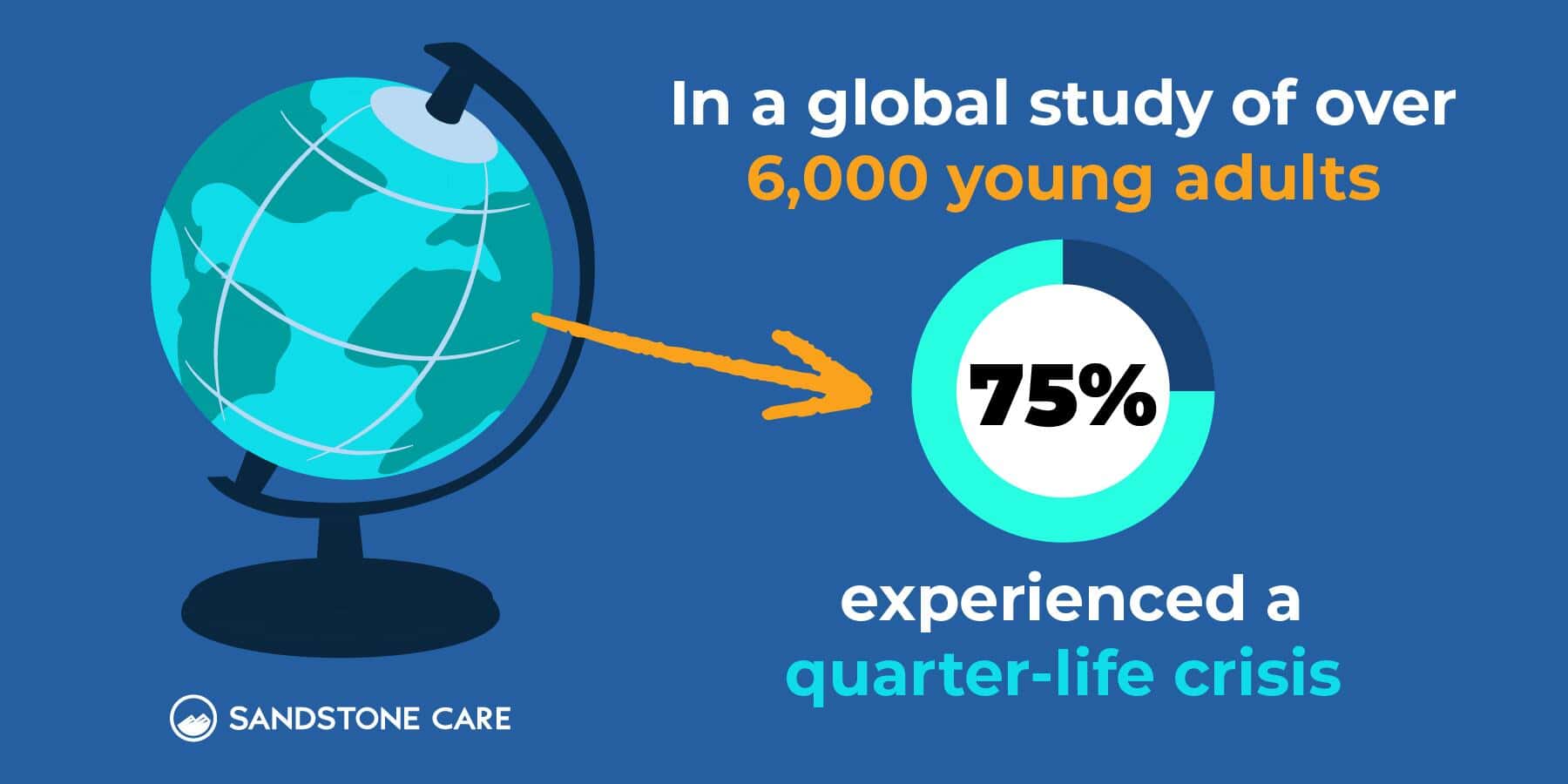
In a global study of over 6,000 young adults that spanned the United States, the United Kingdom, Australia, and India, 75% of those surveyed indicated that they experienced a quarter-life crisis.
As young adults navigate emerging adulthood, the stressors and pressures can feel overwhelming, especially if there is a lack of social support or support from mental health professionals.
If you find yourself experiencing a quarter-life crisis or a mental health breakdown, reach out for help. Sandstone Care recognizes that young adulthood is an especially stressful time and has specialized facilities to meet the mental health care needs of young adults. Call (888) 850-1890.
Why Are There So Many Mental Health Problems as a Young Adult?
There are so many mental health problems in young adults, likely due to a combination of increased pressure during this time, as well as other underlying factors such as mental illness.
Emerging adulthood is a time for soul-searching and figuring out who you are and what you want in life.
While young adults often accomplish many milestones, they may also experience lingering effects of the pandemic, substance abuse from trying to cope, and other stressors related to work and relationships.
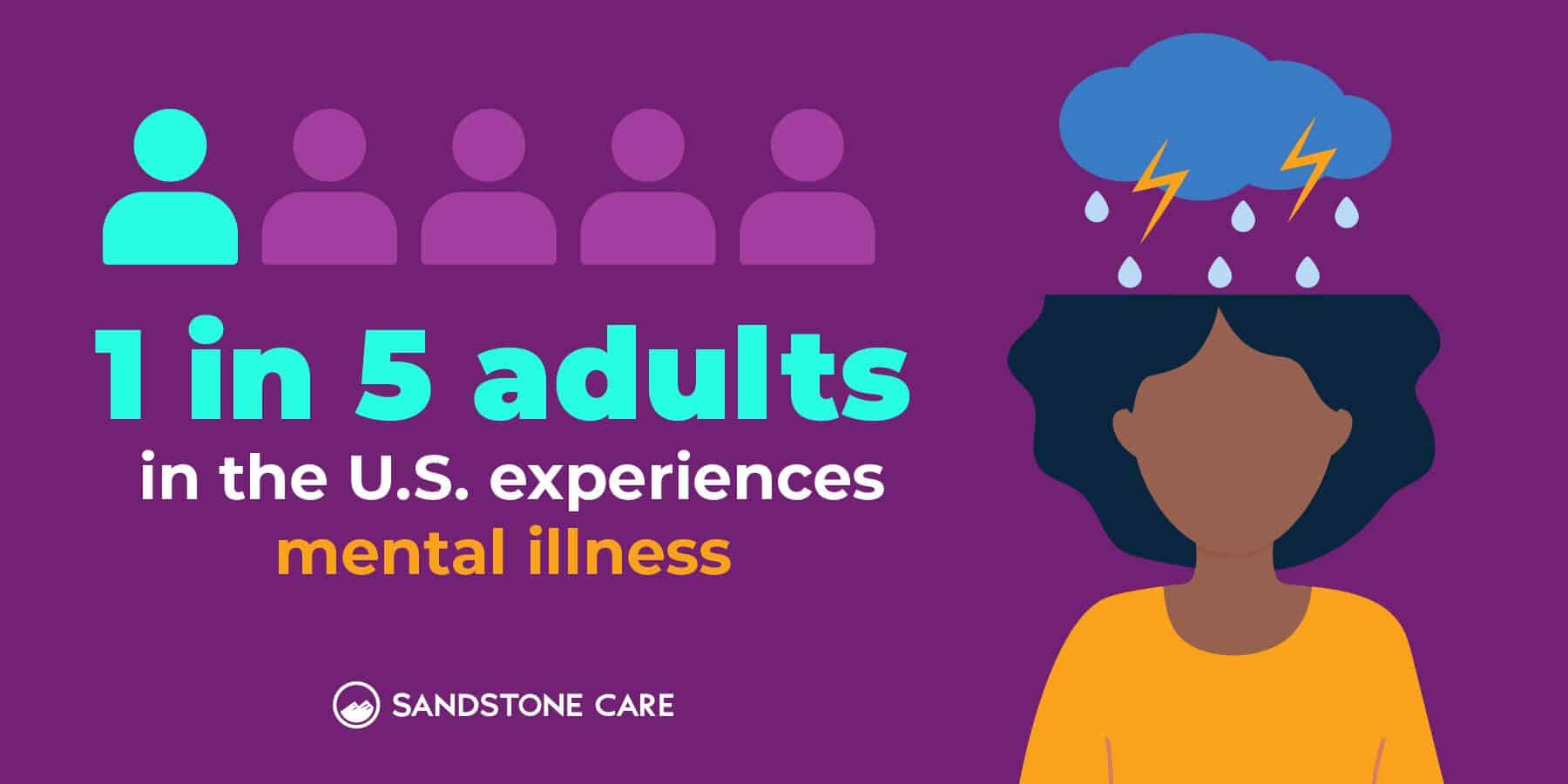
It is also important to note how common mental health and mood disorders are among adults. More than one in five adults in the United States experiences mental illness.
The most common mental illnesses are dual diagnoses (substance use disorder combined with another mental illness), anxiety, and major depressive disorder.
Underlying mental health conditions, as well as outside variables such as financial stress, travel, alcohol use, and fitness, may impact the severity of quarter-life crises in young adults.
Therapy for Quarter Life Crisis
How Do You Handle a Quarter-Life Crisis?
To handle a quarter-life crisis, have compassion for yourself and seek professional help if needed.
It is normal to question career and relationship choices, evaluate who you are as a person, consider your values, and question where you want to go in life.
Strategies to handle a quarter-life crisis can include:
Engaging in self-reflection: Take time to assess your goals, values, and priorities. Journaling and talk therapy may help things feel clearer during your process of self-discovery.
Setting new and achievable goals: If life feels overwhelming, break down larger life changes into smaller, more manageable steps. A therapist, coach, or mentor can help you break down your goals if needed.
Practicing mindfulness and grounding exercises: It is easy to become overwhelmed by thoughts of the future. Think of three things you are grateful for today. Touch three things, move three body parts, and look for three different colors in your surroundings to bring yourself back to the present moment.
Leaning on support systems: Reach out to family members, friends, loved ones, or mental health professionals for support. Sometimes talking about things out loud can help you process upcoming changes and provide clarity on what you want.
Can Therapy Help With a Quarter-Life Crisis?
Yes! Therapy can absolutely help with a quarter-life crisis.
Mental health professionals are trained to:
- Provide guidance
- Help people understand and work through their feelings
- Improve self-esteem
- Re-frame challenges
- Navigate feelings of self-doubt
Therapy can also help you develop a toolkit of effective coping strategies for depression, stress, and anxiety instead of leaning on harmful coping strategies, such as alcohol or other substances.
What Is the Best Treatment for a Quarter-Life Crisis?
There are several treatment options for a quarter-life crisis, including, but not limited to:
Mentorship: The healthcare world recognized that mentorship is a valuable tool for new graduates as they navigate building their careers. A trusted relationship with someone who has more life experience can help you navigate the transition to early adulthood and professional life.
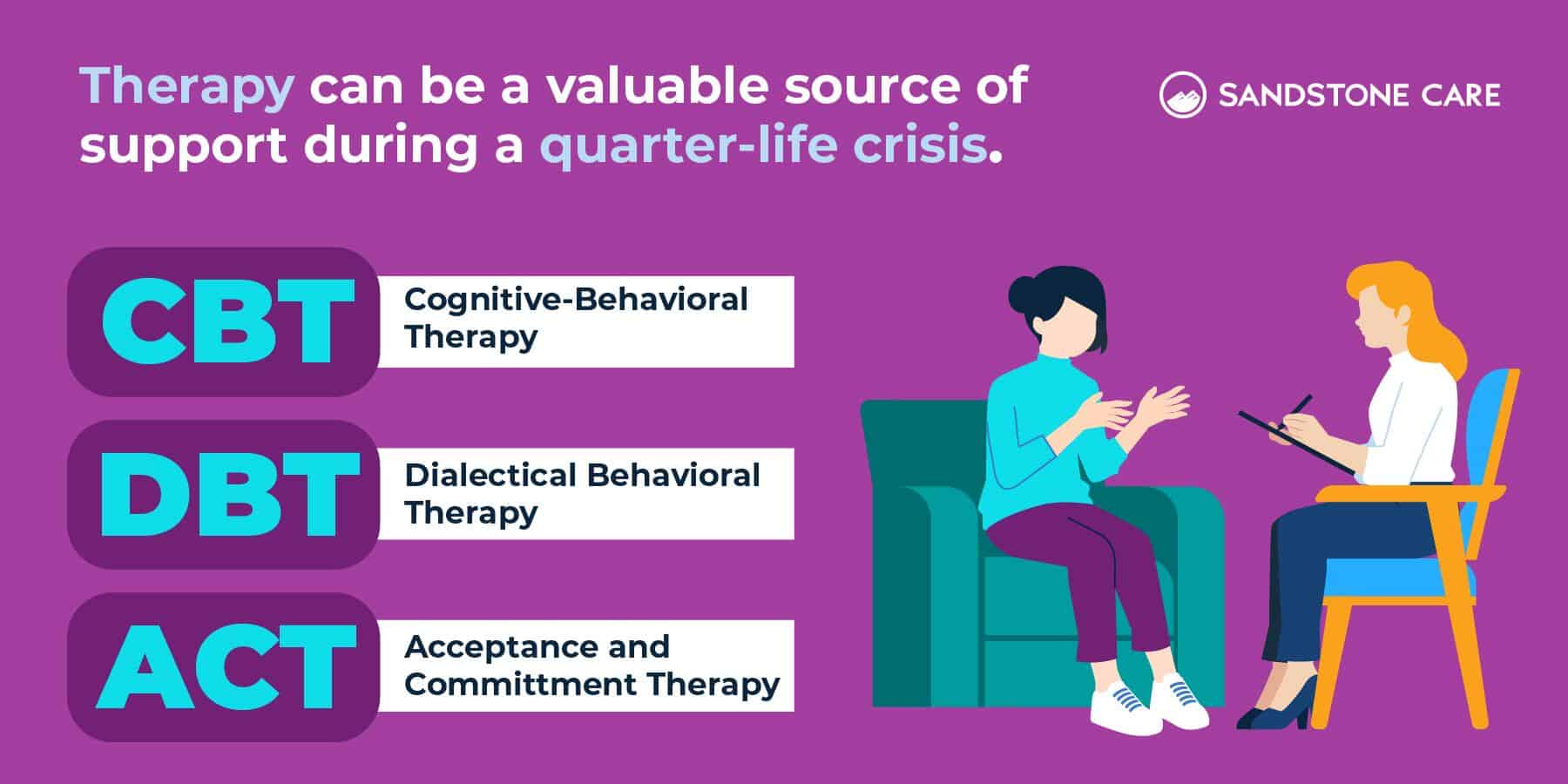
Therapies: Different therapy types, such as cognitive-behavioral therapy (CBT), dialectical behavioral therapy (DBT), acceptance and commitment therapy (ACT), and mindfulness-based therapy may help. While there are differences between therapy types, they can all help you reframe and process through your challenges.
Career counseling or coaching: A coach has different training from a therapist. Some people prefer this style of support over a therapist, or combine the two. A coach can also help you gain clarity around future goals and aspirations.
Sandstone Care is here to help and offers several therapy programs led by trained clinicians. Treatment is available in both residential and outpatient settings. Call (888) 850-1890.