
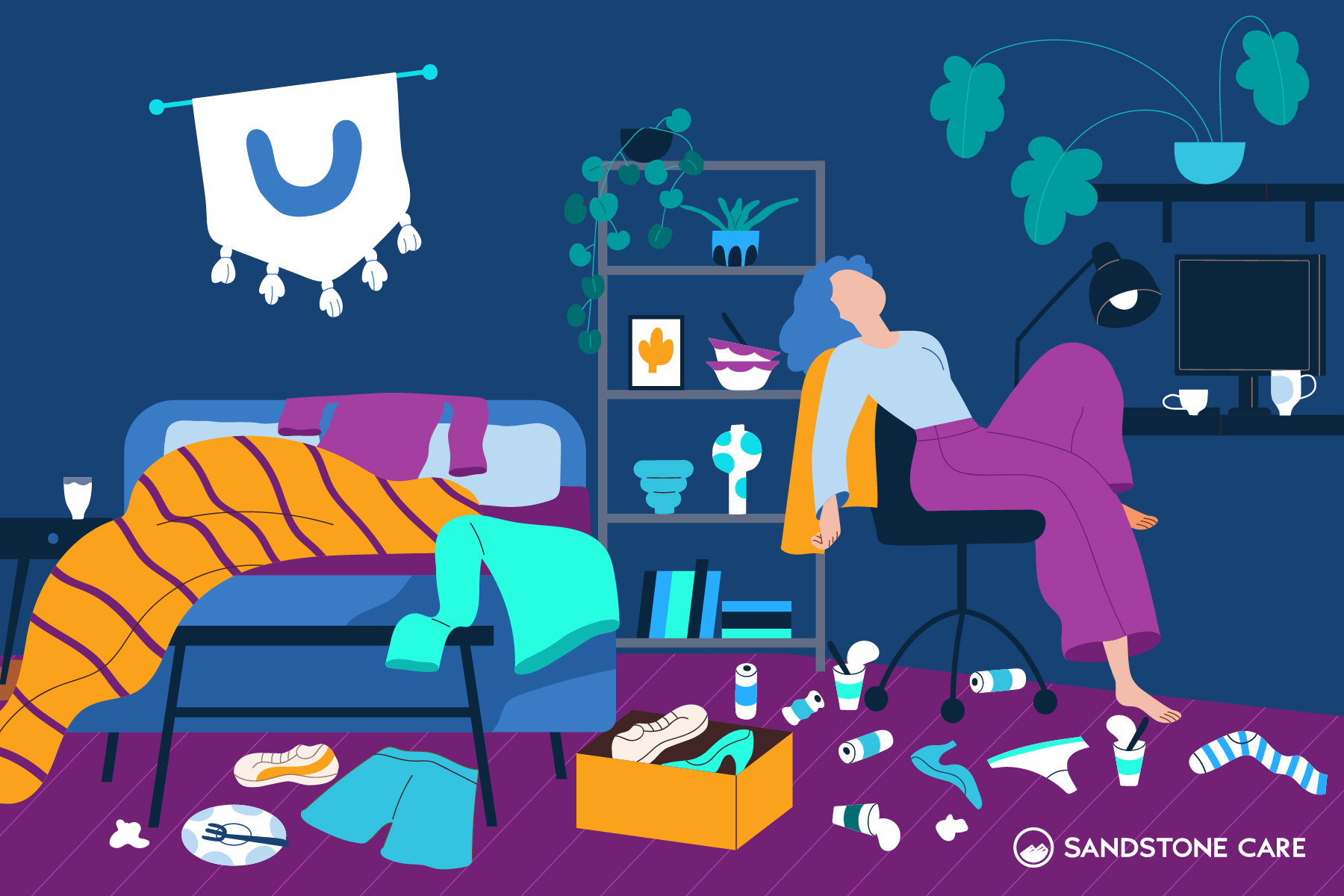
Messy Room, or Depression Room?
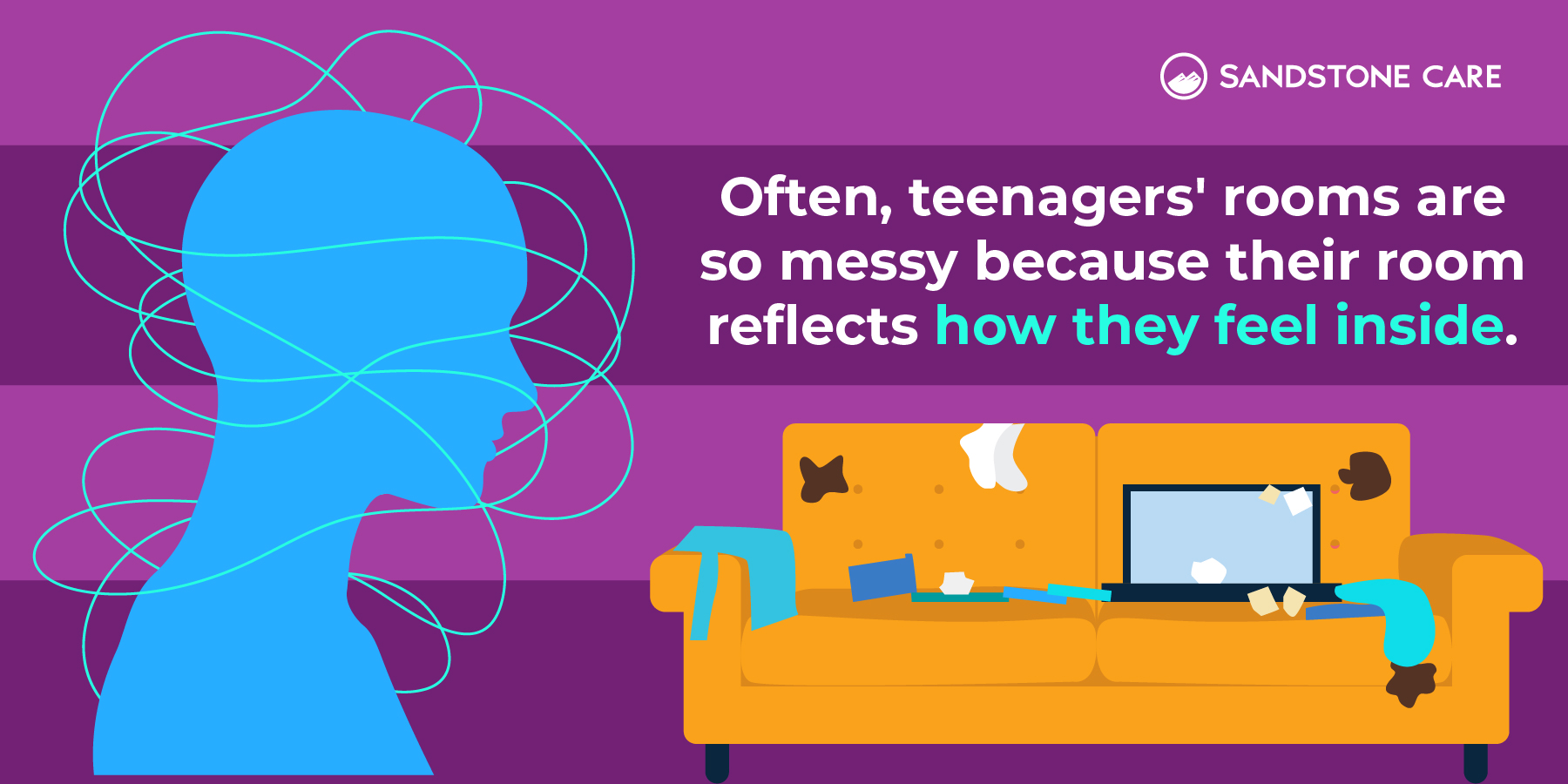
Why Are Teenagers’ Rooms So Messy?
A teen’s messy room isn’t always “laziness.” Sometimes, it’s a visible clue that they are dealing with something difficult behind the scenes. They might be stressed, overwhelmed, or trying to navigate symptoms of a mental health condition they can’t express yet.
Teenagers are living through a constant storm of change. With intense hormones, chaotic emotions, heavy school demands, high social pressure, and nonstop digital stimulation, it can feel impossible to keep their heads above water.
To make matters worse, the parts of the brain responsible for planning and staying organized aren’t finished developing yet. When a teen is anxious, depressed, burned out, or dealing with executive functioning challenges, cleaning can slide from “I should do this” to “I can’t even start.”
It’s also important to keep perspective: sometimes a messy room is simply a normal part of growing up. The key is noticing patterns. For example, if the mess appears suddenly, gets dramatically worse, or shows up alongside other signs like low mood, irritability, isolation, sleep changes, or slipping grades, then it could be a sign of depression instead.
What Is a Depression Room?
A “depression room” is a non-clinical term that describes a bedroom or personal space that becomes extremely cluttered, disorganized, or neglected when someone is struggling with depression.
When a teen is depressed, even simple tasks like picking up clothes, taking out trash, or making the bed can feel overwhelming. Depression often affects energy, motivation, concentration, and decision-making. As a result, the room may slowly fill with dirty laundry, food wrappers, unfinished schoolwork, and clutter.
This doesn’t necessarily mean the teen doesn’t care, but they may not have the emotional or mental bandwidth to keep things organized.
While every teen is different, a depression room often includes:
-
Piles of clothes on the floor or bed
-
Trash or dishes left for long periods
-
Unmade beds and general disorganization
-
Little effort put into personalizing or maintaining the space
It’s important to note that a messy room alone does not mean a teen is depressed. Many teens are naturally messy as part of normal development.
A messy room becomes a depression room when it happens alongside other warning signs, like low mood, isolation, losing interest in activities, or struggling in school.
Why Do People Who Are Depressed Not Clean Their Rooms?
People with depression may struggle to clean their rooms because of symptoms like:
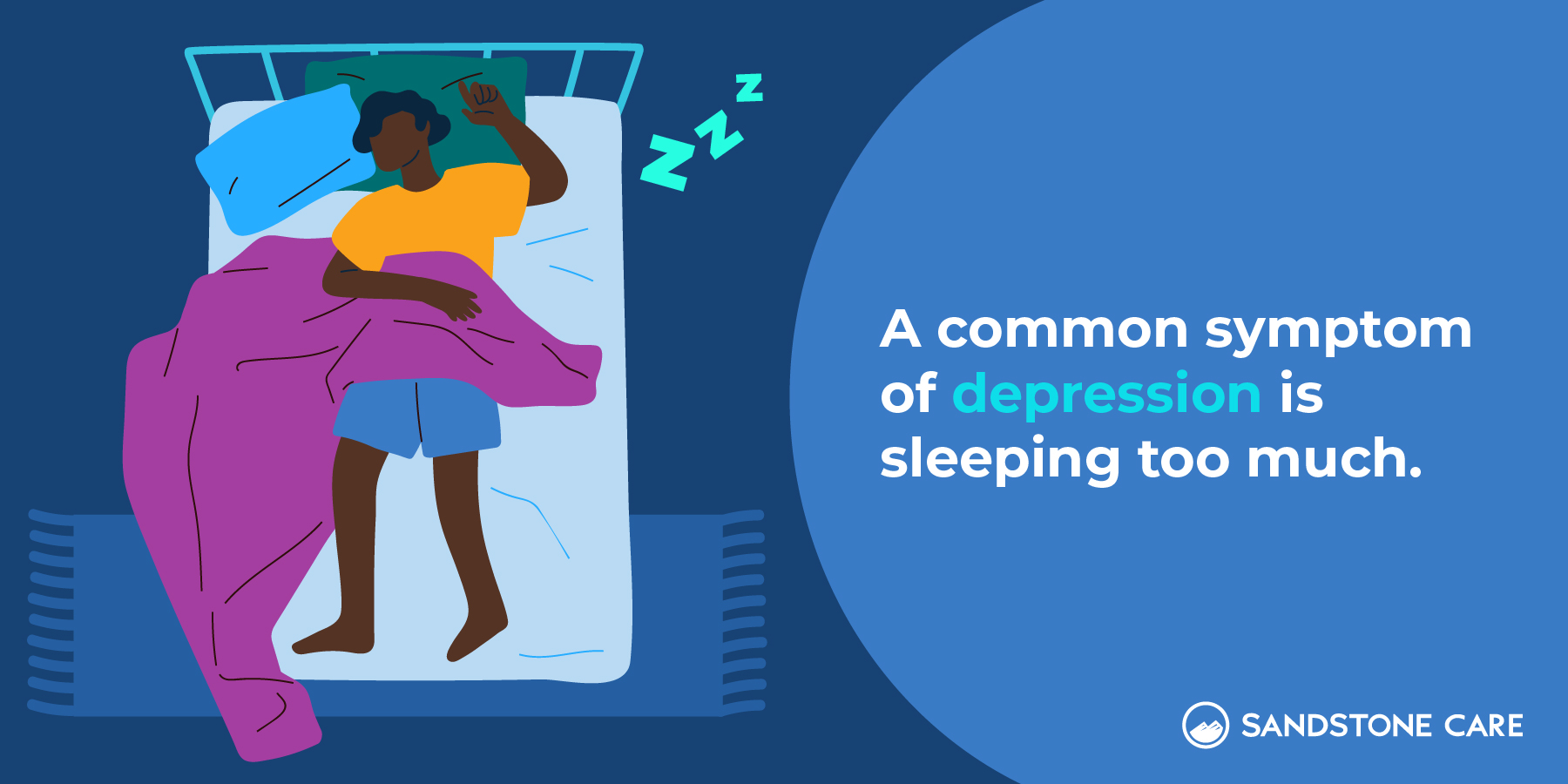
- Sleeping too much
- Difficulty making decisions
- Feeling tired, even after sleeping
- Feeling irritable or easily frustrated
- Feeling hopeless or worthless
- Feeling sad
- Not wanting to participate in activities
When you feel like your body is too heavy to move, or that there is nothing to look forward to, it can be difficult to see the point of cleaning. Even if someone with depression wants to keep things more organized, it can feel physically impossible when they are drowning in fatigue and executive dysfunction (struggling to move from task to task).
What Is Messy House Syndrome?
“Messy house syndrome” is a popular, informal term used online and in self-help spaces to describe a pattern where a person feels unable to keep their living space clean or organized.
It is not a recognized medical or mental health diagnosis, and you will not find it in the DSM-5 or other clinical manuals.
From a clinical perspective, what people call “messy house syndrome” is more accurately explained by executive dysfunction, a difficulty with planning, initiating, prioritizing, and completing tasks.
Executive dysfunction is commonly associated with conditions such as ADHD, depression, anxiety disorders, trauma-related conditions, chronic stress, and caregiver burnout.
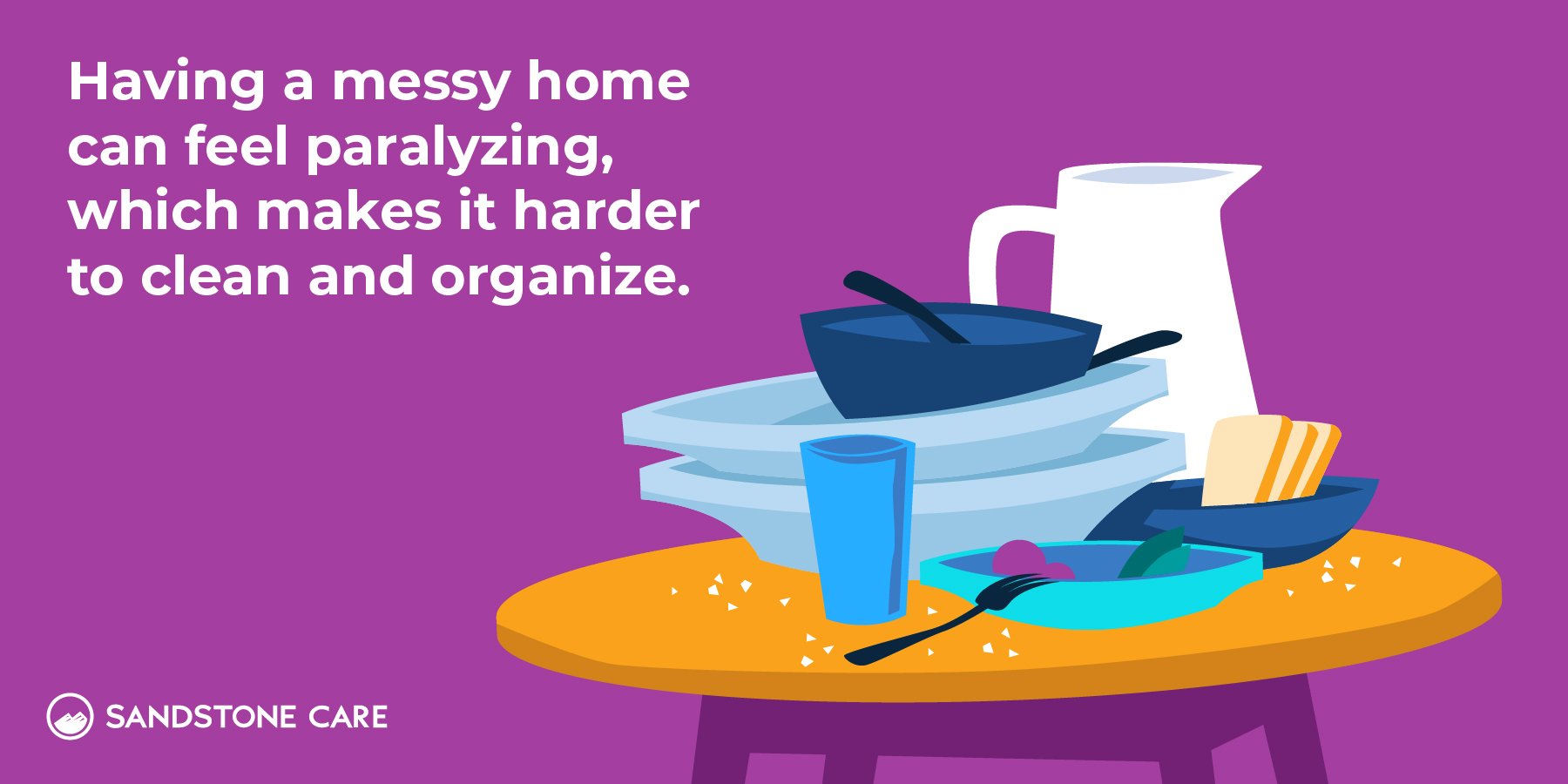
Someone with an extremely disorganized home may feel paralyzed by the mess and unable to clean up, even when the mess makes them feel worse.
Causes of Messy Rooms
Can Mental Health Issues Cause a Messy Room?
Yes, mental health issues can cause a messy room. A consistently messy room can be a sign of depression, ADHD, anxiety, or even hoarding in extreme situations.
When your teen is struggling with their mental health, cleaning up isn’t just a chore; it can feel like an impossible mountain to climb.
While picking up your bedroom may seem like a simple task, it requires the ability to get started, stay on task, and make several decisions throughout the process.


Does ADHD Make It Hard To Clean?
Yes, having ADHD can make it hard to clean.
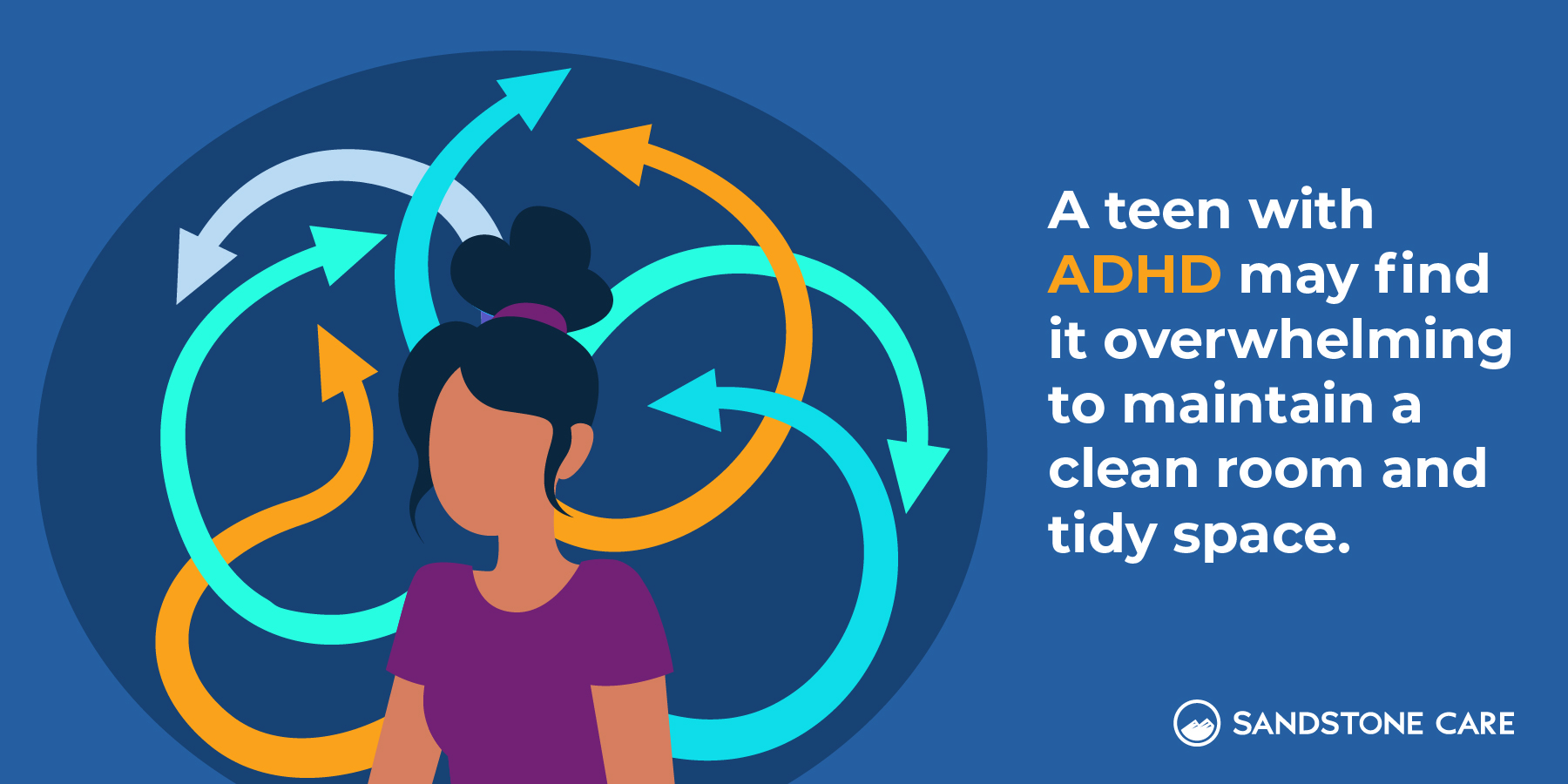
A teen with ADHD may find it overwhelming to maintain a clean room and tidy space.
Common symptoms of ADHD can include difficulty with the following:
- Concentrating
- Paying attention
- Staying on task
- Executive functioning
- Getting easily distracted
- Completing tasks
- Following instructions
- Organizing tasks and time management
These traits of ADHD can make the task of cleaning much harder than it is for those who don’t have ADHD.
Is a Messy Room a Sign of Depression in My Teen?
Yes, a messy room can be a sign of depression in your teen, especially if they used to care about their living space.
Look for other signs, too. For example, if your teen’s room suddenly becomes messy and the messiness coincides with additional symptoms, such as a lack of motivation, social withdrawal, changes in sleep patterns, or other concerning behaviors, check in with them.
If your teen doesn’t want to check in with you or becomes defensive, consider reaching out to another trusted grown-up in their life. Maybe they’re close to another family member, a teacher, a counselor, or a friend’s parent who you can share your concerns with.
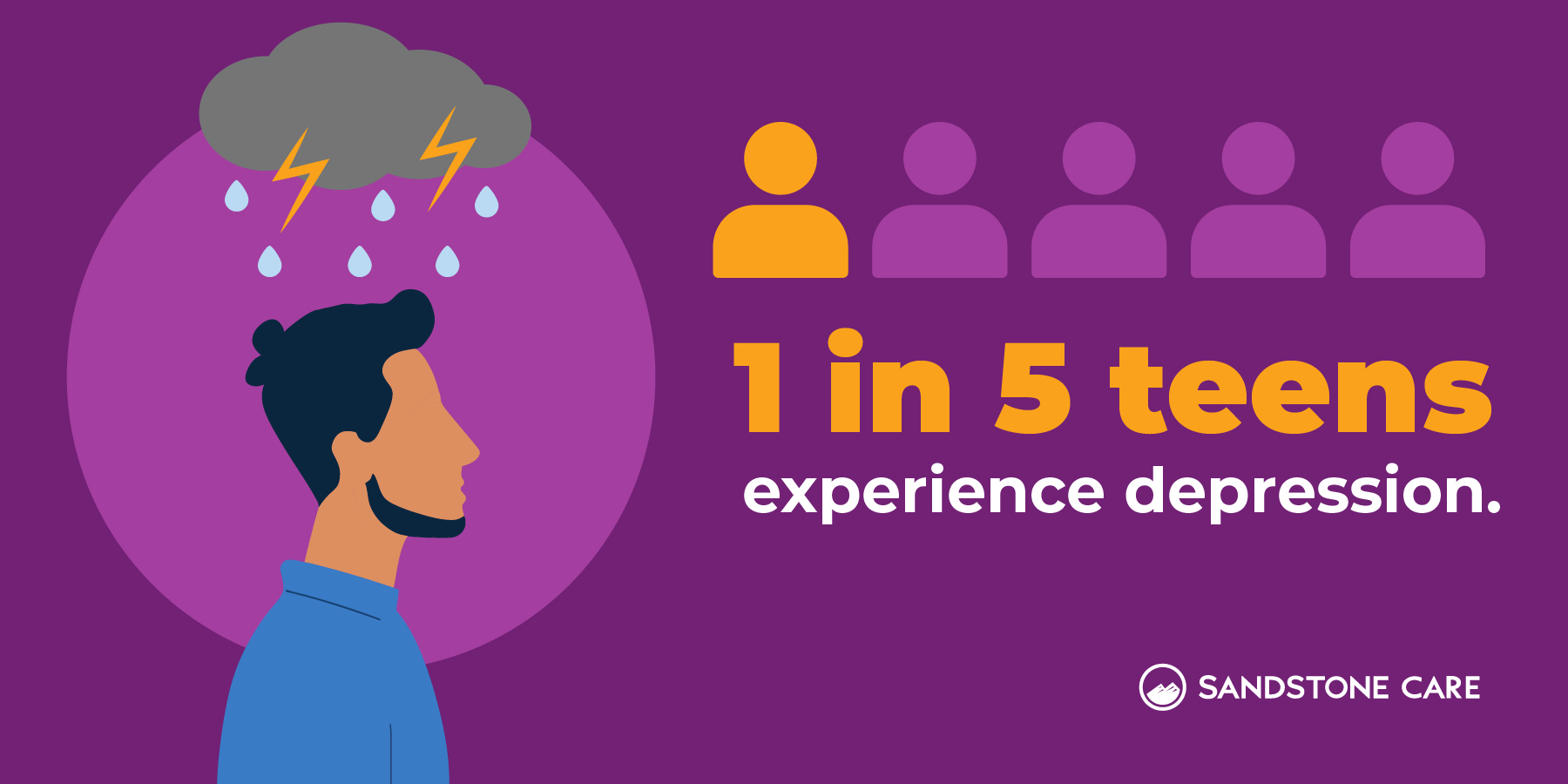
Depression is common in teens, with one in five teens experiencing depression at some point. Girls are at a higher risk than boys of developing depression.
Besides common symptoms of depression, there are signs and symptoms of depression specific to teens.
Symptoms in teens include, but aren’t limited to:
- Irritability
- Sudden outbursts of anger
- Physical complaints such as headaches and stomach aches
- Sensitivity to criticism
- Sudden drop in grades or attendance
- Avoiding homework
- High-risk behaviors, such as shoplifting or substance abuse
As their parent, you know your teen best. Listen to your gut. If you feel something is off, talk to your child. Don’t be afraid to seek help from medical providers, it doesn’t mean you failed or that your child is broken, it only means you are using every resource available to help them feel better.
Effects of Dirty Rooms on Mental Health
Can a Messy Room Disrupt Sleep?
Yes, a messy room can disrupt sleep and have a negative impact on sleep quality.
When your living or sleeping space is cluttered, it is harder for your brain to relax. While your teen may not be consciously thinking about it, all the clutter around them sends the signal that there is unfinished business left to attend to.
Unorganized clutter and chaos can activate the brain’s stress response and increase stress hormones, such as cortisol. Stress hormones can make it harder to unwind, fall asleep, and stay asleep.
If your teen is also having a hard time with sleep, the lack of rest can worsen mood swings, concentration issues, and symptoms of depression.
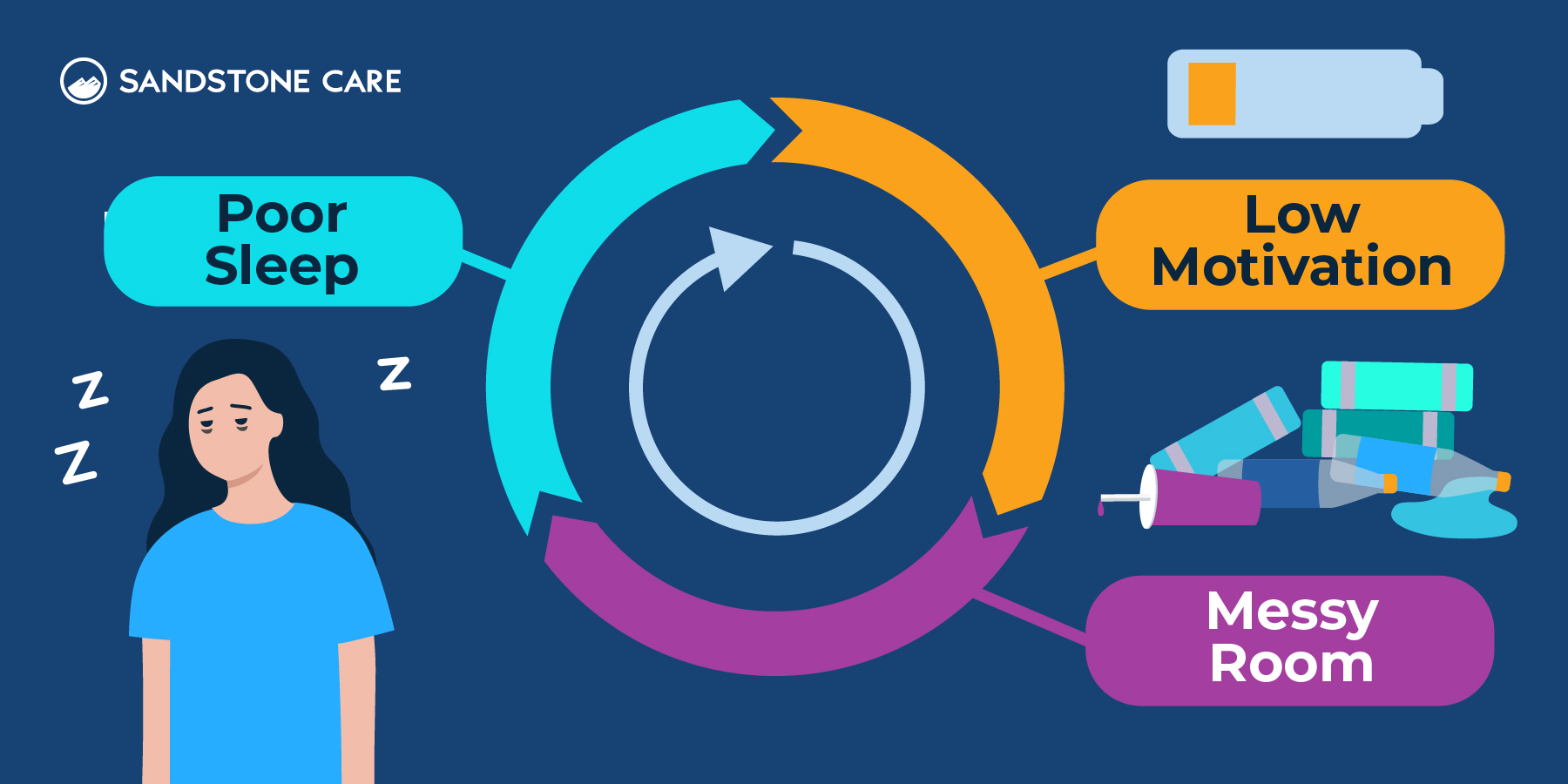
It can become a negative cycle where poor sleep contributes to low motivation, which in turn worsens the messy room, and ultimately leads to further poor sleep.
In one study, although the focus was primarily on middle-aged females, decluttering their rooms was found to improve sleep quality in patients with insomnia.
At the extreme end of clutter, those who have a hoarding disorder may experience two to five times the amount of sleep impairment as those without the disorder.
The takeaway is that calm spaces can promote a calm mind and improved sleep.
Can a Cluttered Space Cause Anxiety?
Yes, a cluttered space can cause anxiety and irritability because the clutter is constantly reminding your teen of unfinished tasks.
Your brain, whether you are a teen or adult, craves order. When you see piles of stuff everywhere, it can create stress.
This stress can look like:
- Increased cortisol levels
- Overloaded decision-making capacity (too many things to put away, and where should they all go?)
- Feeling like you’ve lost control
The physical clutter can lead to mental clutter. Mental clutter can cause anxiety, and the anxiety can make it harder to start the task and clean.
Do Messy Living Spaces Make You Feel Worse?
Yes! Messy living spaces can make both you and your teen feel worse.
The messy room depression cycle is a tough one to break out of. The clutter can increase feelings of stress, which can lower energy levels and raise stress hormones such as cortisol.
A cluttered environment may also impact mental wellness, worsening depression symptoms and making decision-making harder.
In contrast, reduced clutter can have a positive impact on well-being.
Your teen may initially not clean their room because they feel depressed or unmotivated. However, as the mess builds up, the task of starting to clean can feel overwhelming.

Is this blog hitting close to home?
We’re here to help.
How To Help My Child With Their Messy Room
How Do I Help My Teen Clean Their Room?
To help your teen clean their room, especially if they are struggling with their mental health, lead with compassion, help them make a plan, and seek treatment for the root cause as soon as possible.
It’s easy to feel frustrated. It can seem like they are almost purposefully trying to irritate you, or at the very least, they may seem disrespectful of the space that you share.
Tidying up their own space might feel like a task your teen should be able to do. However, it is necessary to separate your judgment and feelings from the task at hand.
Avoid criticism and lead with compassion: Refrain from using shaming phrases like “you’re so lazy” or “your room is disgusting.” If your teen feels judged or shamed, they are less likely to clean their room. In fact, if they are struggling emotionally, feeling ashamed or embarrassed can actually trigger symptoms that make it physically harder for them to get tasks done.
Instead, try leading with compassion and curiosity. Consider a statement like, “I’ve noticed your room’s been messier lately. Is everything okay?”
Then you can set firm expectations, while reminding them you are there to help find a solution.
Avoid harsh or angry consequences: Since your teen is struggling to feel motivated, it can feel like the only option left is to threaten them or take privileges away. This will likely make things worse and take away what little motivation they have been scraping together.
Instead, aim for a response that combines clear expectations with empathy. You can still hold boundaries (“We need food and trash out of the room for health reasons”), but deliver them calmly and collaboratively.
Try focusing on small, achievable steps and offering help with getting started.
It is important to remember that messiness isn’t a moral failure. Even if your teen’s room could win a science project, they are still a good kid. And if your teen’s room is that bad, it is likely a sign that they need you now more than ever.
Help your teen break down the task: Instead of insisting that your teen clean their entire room, break it down into smaller tasks. You could ask them just to make their bed or declutter their desk.
If they’re open to it, maybe they’ll be willing to let you help. Decluttering one small section of their room can feel less intimidating and give them the win to keep going.
Talk about stress and mental health: Open up conversations about mental health and normalize it. Let your teen know that you understand that if they are feeling stressed or anxious, it can make cleaning tough, and there is no shame in asking for help.
If your teen asks for help with their room or in accessing mental health support, be sure to follow through.
Seek professional support if needed: Sometimes it’s time to bring in the experts. If your teen’s messy room is also linked to other symptoms, such as sadness, withdrawal from friends, or a lack of motivation that lasts weeks, consider reaching out to a professional.
Starting points for help include your school counselor or your child’s pediatrician.
Other ideas for helping your teen clean their room include:
- Setting a timer and then taking a break or stopping when the timer goes off
- Playing upbeat music
- Setting a definite end time
- Planning something fun after, even if the room isn’t entirely cleaned
How Do I Help My Teen When They Feel Overwhelmed?
To help your teen when they feel overwhelmed, let them know that you support them in a way that doesn’t bring shame or judgment.
Teens want to know they are accepted for who they are. Being a teenager is a time of pushing boundaries and further developing into one’s own person.
However, teens are still kids and need love, guidance, and support from their parents and caregivers. It’s a delicate balance between setting appropriate boundaries, helping without doing everything, and supporting your child.
To help your teen when they feel depressed or overwhelmed, ask open-ended questions, but avoid prying for more information if they don’t seem willing to share.
If your teen doesn’t want to talk, consider:
- Placing a journal on their bed for them to write in
- Leaving them a note
- Giving them a book to read about mental health on their own
- Suggesting a podcast
- Offering to spend time with them
For example, ask to take them to their favorite cafe or boba shop. Don’t pry or ask a bunch of questions, as tempting as it is. Let your teen lead the conversation and talk about whatever they feel comfortable discussing. Small moments of connection can go a long way over time.
If you are concerned your teen is struggling, and it is not an immediate emergency, reach out to a mental health treatment center for help. Sandstone Care recognizes that being a teen is hard and has treatment programs to meet the mental health care needs of teens in both inpatient and outpatient settings. Call (888) 850-1890.
When Should I Seek Help for My Child?
Reasons to seek help for your teen include:
- Their messiness is affecting school, friendships, and basic hygiene
- They are showing depressive symptoms such as hopelessness, low energy, or sleep changes
- They are avoiding family members or friends
- They stop engaging in their favorite activities
- You are concerned about substance use (alcohol, weed, etc.)
- You notice they are self-harming
If you’re seeing one or more of these signs, it may be time to reach out for professional support.
This doesn’t mean you’ve failed as a parent, in fact, it shows that you are willing to do whatever you can to help your child be successful.
Every teen’s situation is different, and it can feel difficult to know whether or not your teen is at the point that they need external help.
Messiness can be linked to depression, anxiety, ADHD, trauma, substance use, or simply feeling overwhelmed and stuck. Teen development is also highly individual, which means there isn’t a single “right” explanation or one-size-fits-all solution.
Programs like those offered by Sandstone Care can help families sort through what’s really going on, and keeps you involved every step of the way.
Because these programs are age-specific, they are designed around the realities of teen and young adult development: social pressure, school stress, identity changes, and brain development included.
Our specialized treatment team can work with your teen to identify the root cause behind the behavior, evaluate mental health and substance use concerns, and build a plan that fits your child’s needs.
It’s important that whatever treatment program you choose, your teen learns practical, evidence-based skills to manage emotions, reduce harmful coping strategies, strengthen daily routines, and take better care of themselves over time.