

What Is Trauma-Informed Therapy?
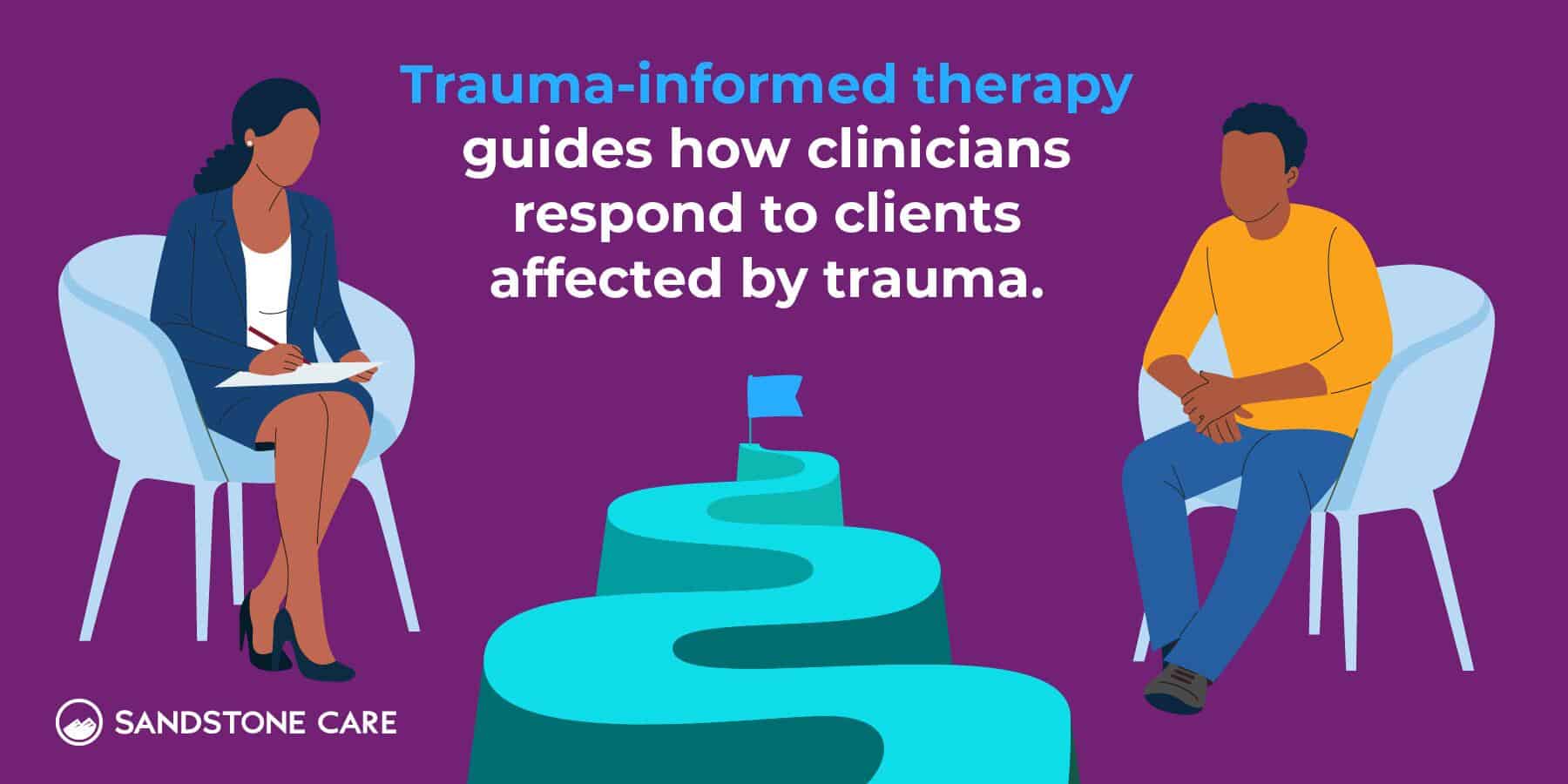
Trauma-informed therapy is a mental health treatment approach that focuses on how past trauma has affected you and how those experiences still shape your life today.
A trauma-informed clinician knows that trauma is common and understands how it can affect your brain, body, and behavior.
Trauma-informed therapy also recognizes that many people who seek help for mental health conditions like anxiety or depression may have a history of trauma, even if they don’t mention it or see themselves as trauma survivors.
For kids and teens, trauma-informed treatment means clinicians understand how trauma can affect a developing brain and influence growth, and they seek ways to support kids and teens who have experienced trauma.
For example, a trauma-informed clinician understands that when a teen who has experienced trauma acts out at school, it isn’t a choice. They see this behavior as a sign that the teen is struggling and needs support, not punishment.
Trauma-informed care is not a single therapy type and is used across several evidence-based treatments, such as:
- Cognitive behavioral therapy (CBT)
- Trauma-focused cognitive behavioral therapy (TF-CBT)
- Dialectical behavior therapy (DBT)
- Eye movement desensitization and reprocessing (EMDR)
- Family therapy sessions, other forms of talk therapy, and substance use therapies
How Does Trauma-Informed Therapy Work?
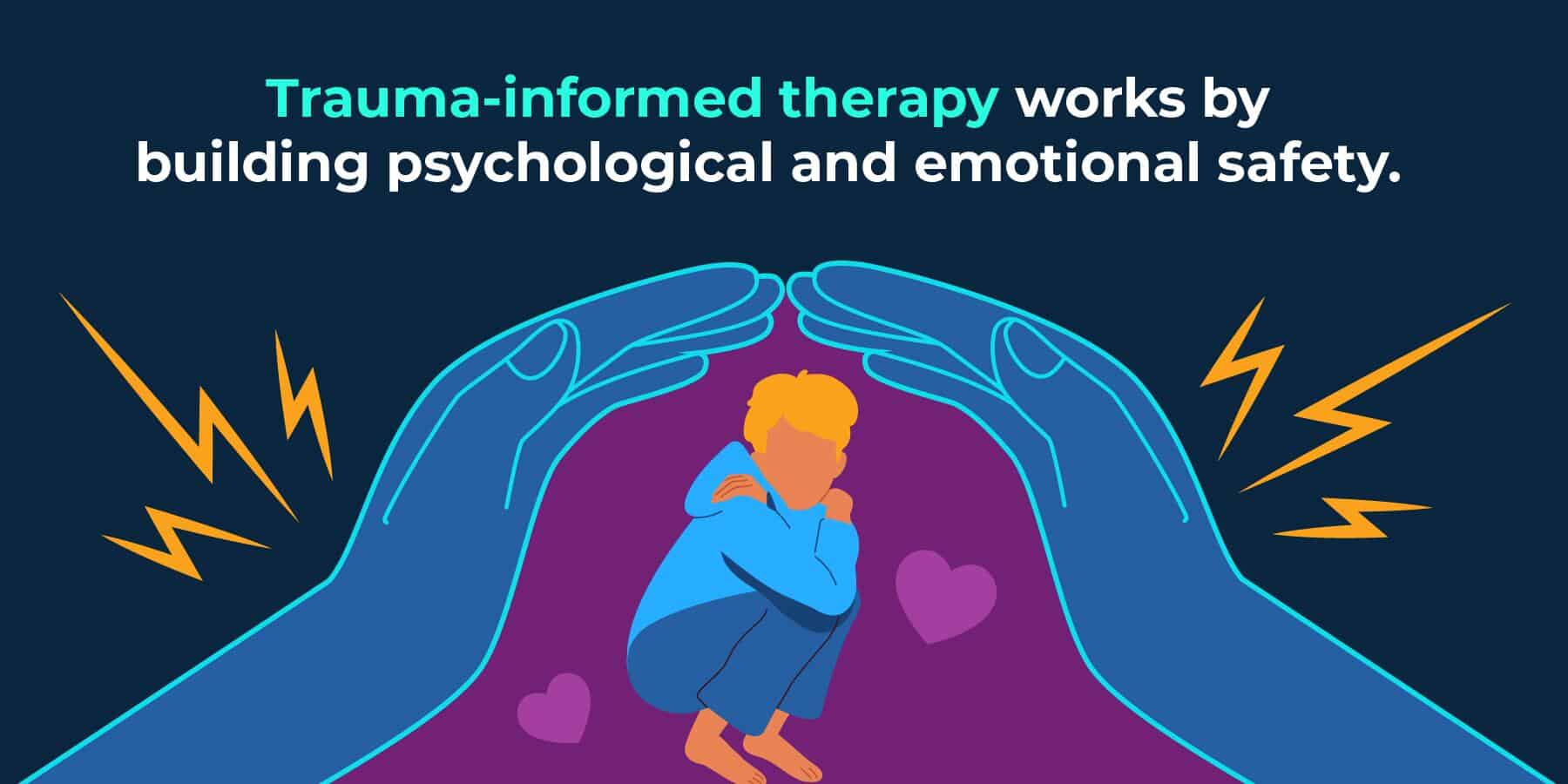
Trauma-informed therapy works by building psychological and emotional safety.
Psychological and emotional safety are essential so you can work through and process your trauma without causing more harm.
A trauma-informed clinician shifts the narrative from “what’s wrong with you” to “what happened to you.” They understand how trauma affects the nervous system, decision-making, behavior, and trust in others.
One of the risks of therapy for someone who has experienced traumatic events is re-traumatization.
Re-traumatization can happen when a clinician asks you to relive or talk about traumatic events without helping you feel safe first. It can stall growth and healing, cause anxiety, and make it harder for you to participate in your treatment.
For example, a trauma-informed therapist may do things like:
- Offer choices, such as providing several different seating options in their office
- Ensure safety, such as helping you not feel trapped by giving you a clear exit path and not sitting between you and the door
- Ask before they do things that could be triggering
- Provide regulation strategies before working on trauma or deep emotional work, and offer breaks as needed
- Ask for your consent before bringing up challenging topics to avoid re-traumatization and re-living experiences before you are ready to talk about them
- Include you in decision-making around your care
When therapists and other mental health professionals use trauma-informed care practices, it reduces the risk of re-traumatization as you work to recover.
What Is the Difference Between Trauma Therapy and Trauma-Informed Therapy?
The difference between trauma therapy and trauma-informed therapy is that trauma therapy focuses directly on processing traumatic memories.
In contrast, trauma-informed therapy makes sure the mental health care team takes into account the effects of trauma on people.
Trauma-informed therapy assumes most people have had traumatic experiences that shape how they view the world.
It is estimated that nearly 90% of adults in the United States have experienced exposure to trauma. And it is estimated that just over 40% of adults in the United States have directly faced a traumatic event themselves.
At mental health treatment centers like Sandstone Care, trauma-informed therapy and care practices are at the center of how we care for and treat our clients.
Are Trauma-Informed Approaches Evidence-Based?
Yes, trauma-informed approaches are evidence-based. Research supports trauma-informed care across several disciplines, including public health, behavioral health, and mental health.
Several organizations have identified trauma-informed care approaches as best practice, including, but not limited to:
- Substance Abuse and Mental Health Services Administration (SAMHSA)
- American Psychological Association
- National Center for PTSD
Additionally, specific interventions, such as trauma-focused cognitive behavioral therapy (TF-CBT), are evidence-based treatments. These treatments may help people with trauma recover from difficult symptoms.
What Is an Example of a Trauma-Informed Practice?
In a trauma-informed practice, a clinician may explain why they’re asking specific questions, check in with you about how you’re feeling, and offer breaks if sessions become overwhelming.
A trauma-informed approach means the clinician normalizes trauma responses (for example, it’s ok to cry) and teaches regulation skills before doing deep emotional work.
Trauma-informed therapy can look like:
- Focusing on trustworthiness and transparency
- Giving you control and choices in your treatment and care plan
- Encouraging open communication and teamwork between providers and others involved in your care team (e.g., parents, psychiatrists, school counselors, etc.)
- Supporting and empowering you in your plan of care and encouraging questions instead of expecting you just to do as you’re told
- Teaching self-care and healthy coping strategies for symptoms of trauma
As an organization, Sandstone Care uses a trauma-informed approach by:
- Understanding that there are several paths to recovery and offering several options to receive individualized care
- Recognizing the signs and symptoms of trauma, both individually and in family systems
- Providing resources and support to staff who may be at risk for burnout and vicarious trauma, which can happen when someone is exposed to other people’s trauma
- Integrating trauma-informed care practices into policy, procedures, and care practices
- Actively working to avoid re-traumatization by teaching healthy coping and regulation skills and offering therapy with trained clinicians and care teams


Do I Need Trauma-Informed Care?
If you, a family member, or a friend is looking for mental health care, trauma-informed treatment is a good place to start.
Many people think of trauma as something big, like surviving a natural disaster or assault. In reality, trauma is common, and most people have experienced some form of it in their lives or through a friend or family member.
So a trauma-informed care approach benefits most people, even those who don’t identify with a specific trauma.
What Are the Signs That I Need Trauma-Informed Therapy?
Signs that you may need trauma-informed therapy include:
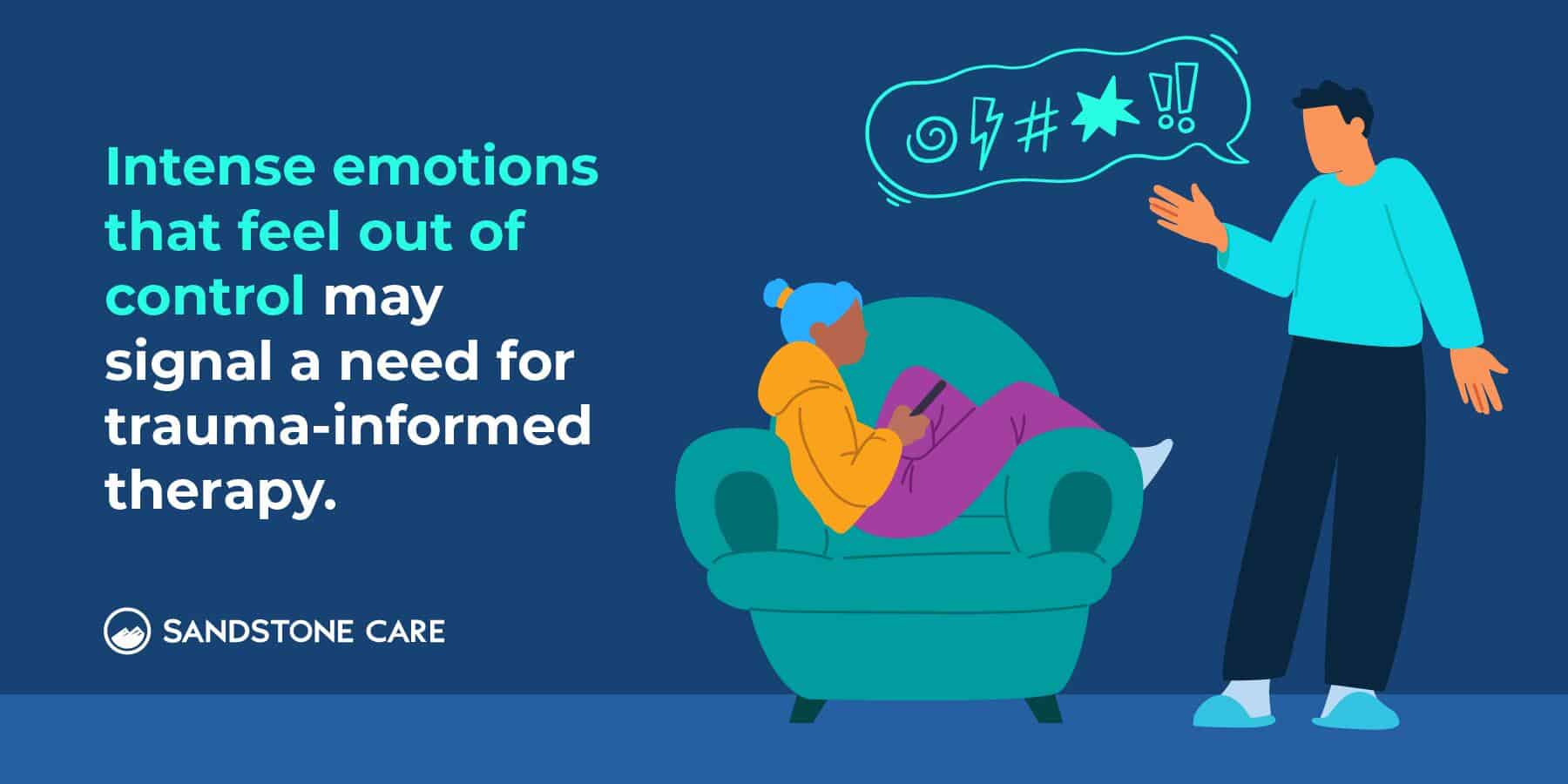
- Strong emotions or reactions that are hard to control
- Ongoing anxiety, depression, stress, or fears
- Difficulty trusting others, including healthcare professionals
- Substance use or substance abuse
- Feeling unsafe, disconnected, numb, or like you’re outside your body
- Experiencing a traumatic event and experiencing symptoms of trauma (e.g., feeling detached, flashbacks, or trouble sleeping)
For example, maybe your mom bought you a new cereal to try while you’re home on break after your first semester away at college, and it’s not what you were hoping to have for breakfast. You tell your mom, “No, thank you,” and she lashes out at you.
You already feel overwhelmed by how different your home feels after only a few months away. You’re triggered, and yelling, and your mom is triggered and yelling, and you have no idea why she is reacting so strongly to you not feeling like cereal for breakfast.
You both want to break the cycle and be understanding towards each other, but you aren’t sure why you’re both responding so intensely. It’s only cereal.
Except it’s not only cereal. Maybe your mom was raised in a home with strict and unhealthy rules around food, and wasn’t allowed to eat junk food like sugary cereals. She may never have had the opportunity to address her past food insecurity in adulthood.
And maybe you’re feeling overwhelmed and lost at college and just want to come home and enjoy your favorite comfort foods. You don’t know how to tell your mom you’re struggling.
Both you and your mom became triggered, and both could use additional coping strategies to build understanding between each other.
In addition to individual therapists, Sandstone also provides family therapy to help families navigate and support each other through mental health challenges.
While many think of traumas as significant events that happen to us, trauma can also result from smaller micro traumas over time, such as unmet emotional needs during childhood and beyond.
A trauma-informed clinician can help you discover new information about yourself and help you build tools to cope with big feelings when they come up.
Does Therapy Take Culture Into Consideration?
Absolutely! A trauma-informed approach recognizes that culture, personal identity, our family systems, and our social circles affect how we experience trauma and our ability to heal.
If your therapist does not consider your culture, you may be at risk for re-traumatization. Additionally, you may feel invalidated or misunderstood.
At Sandstone, we work to get to know you as a whole person, which includes your culture and how you define yourself.
A trauma-informed clinician will consider several aspects of care that may be important, such as:
- Race
- Gender
- Ethnicity
- Gender identity
- Sexual orientation
- Spirituality and beliefs
- Family systems
Who Does Trauma-Informed Care Help the Most?
Trauma-informed care is helpful for most people. Groups that it may help more so than others include:
- Trauma survivors
- People with PTSD or complex trauma
- Individuals with substance use disorders
- Adolescents or young adults struggling with bullying, relationships with peers, or challenges with school
- Those with mental illness, such as anxiety, depression, or bipolar disorder
- Caregivers and family members of those who have experienced trauma
Trauma-informed care is also essential for healthcare providers. Therapists, nurses, and other healthcare staff are at risk of burnout.
Workplaces that advocate for work-life balance, provide employees support, and prioritize staff self-care are essential so staff can show up to work at their best.

Is this blog hitting close to home?
We’re here to help.
How Do I Find Psychologically Safe Treatment?
Finding psychologically safe treatment can feel overwhelming, especially if you have had difficult experiences within the healthcare system.
A trauma-informed program will prioritize safety, choice, and collaboration from the very first interaction. The program listens to you and works to understand your needs.
If you’d like help thinking through what to look for, or just want to talk through your options, our admissions team is available to answer questions. If we aren’t the right fit, we are here to help you find your next step. The goal is to help you feel confident in your care decision. Call (888) 850-1890.
What Are Signs That a Treatment Program Is Trauma-Informed?
A trauma-informed treatment program will:
- Focus on emotional safety first and foremost
- Utilize trauma-informed language
- Be transparent
- Build trustworthiness among clients and within their organization
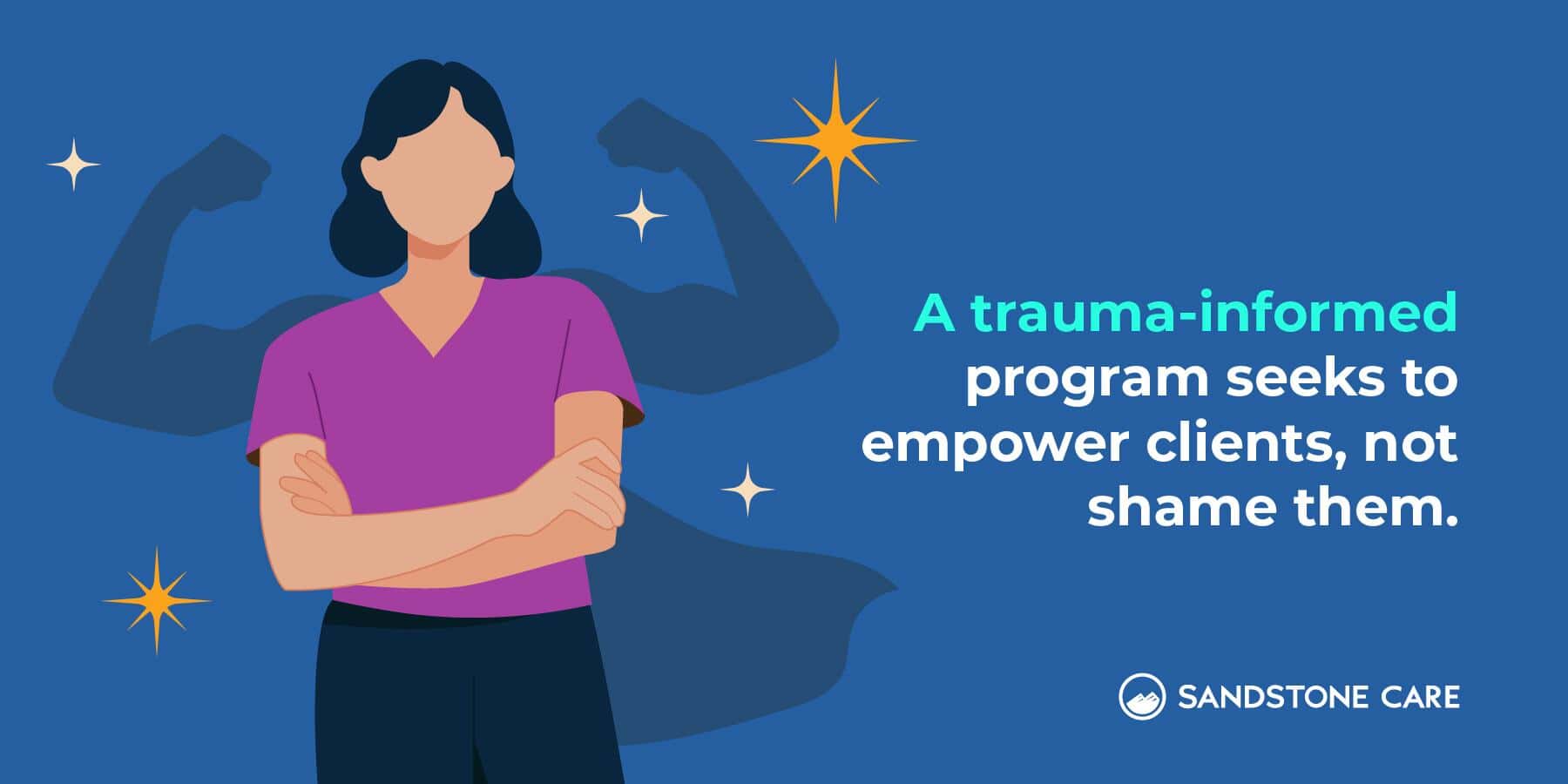
- Seek to empower their clients
- Train staff in trauma-informed principles
- Offer ongoing training to staff in trauma-informed practices
- Provide care in a way that recognizes and honors culture, gender, and historical context
A trauma-informed clinician understands that, for healing to occur, you need to feel safe. When you do not feel safe, you may stay in survival mode, shut down, or hide symptoms, and ultimately end up hurt instead of helped.
Do I Need a Diagnosis To Start Trauma-Informed Therapy?
No, you do not need any specific diagnosis to start getting trauma-informed care.
Trauma-informed care is about how care is provided, not whether you have a specific diagnosis on paper. It recognizes that past experiences can shape how you feel, think, and respond today, and it prioritizes safety from the start.
Everyone deserves trauma-informed care, even if they don’t have a formal, trauma-specific diagnosis (like PTSD). Many people have trauma-related stress that doesn’t fit neatly into one label, and getting a formal diagnosis can take time or may not fully capture what you’re going through.
In trauma-informed programs, such as Sandstone Care, you can start getting support based on your needs. Our clinicians, nurses, medical providers, and staff all work together to provide trauma-informed care.
For example, new clients at our young adult residential treatment center for mood disorders first meet with the nurse and a behavioral health technician (BHT) for an admission assessment.
While you will interact with all of our therapists, you are assigned a primary therapist who will be the main therapist you work with. You will also work with a medical prescriber to adjust medications, as needed.
A day may include group therapy sessions; an outing (e.g., hiking, visiting local parks, walk-and-talks along the nearby creek, ceramic painting, and more); one-on-one therapy sessions or a family therapy session; a visit with the prescriber, if needed; and downtime for self-care.
What Steps Do I Need To Take Next To Get Into Trauma-Aware Therapy?
To access trauma-aware therapy, consider the level of care you are seeking.
Do you need a team that is also specialized in substance use? Are you seeking weekly outpatient visits, or do you require a higher level of care?
When talking to a possible program, consider asking:
- How do you promote a trauma-informed approach with your staff?
- What do you feel makes you trauma-informed?
- How is your intake process trauma-informed?
- What does the daily schedule look like, and what options are available if I feel overwhelmed at first?
- Is your treatment program collaborative?
If you’re considering Sandstone Care, a simple next step is a short call with our admissions team. We’ll listen, answer questions, and help you understand which program might fit your needs.
You can also verify your insurance at any time, so you have a clearer sense of coverage and costs before you start. To talk through options, call (888) 850-1890.