Trigger warning: This article discusses gun violence and the emotional impact it can have, including injury or death, trauma responses, grief, and post-traumatic stress. If these topics are difficult for you right now, consider taking breaks, or skipping this piece. Please call or text the suicide and crisis lifeline at 988 if you are experiencing a serious emotional crisis.
No one should have to live watching for the exit.
It can begin in a classroom, in a parking lot, in a hospital waiting room…or on your phone, when a headline lands and your stomach drops.
Even when gun violence happens far away, the body can respond as if danger is immediate: scanning doorways, flinching at loud sounds, checking on loved ones repeatedly, replaying details you never asked to carry. Anger surges because this should not be normal. Hopelessness follows as it happens again and again. But for many people, the most destabilizing part is the shock of not knowing what to do next.
We are also living through something humans were not built to manage alone: trauma shared at a scale and frequency that previous generations did not absorb in real time. Our brains evolved for threats that were close, time-limited, and processed within a community.
We were not built for constant alerts, graphic footage, and the sense that safety can collapse anywhere. When that kind of stress exists at all times, families can end up isolated inside it, unsure how to help each other without making things worse.
Whether your family was directly impacted or terrified from afar, this guide offers answers and steps for understanding when to reach out for professional help.
Understanding Gun Violence
What is gun violence?
Gun violence refers to any violent behavior involving a firearm, including mass shootings, domestic violence, accidental shootings, community violence, suicide, and homicide. It includes both fatal and nonfatal firearm injuries, and its effects extend far beyond the people who are physically harmed.
Witnesses, loved ones, classmates, first responders, and entire communities can carry lasting trauma, sometimes for decades.
It can also be difficult to even understand what “gun violence” means, because it is not one single kind of event with one single cause.
It is many different experiences that can happen in private homes and public spaces, to people of every background, in moments that are sudden, chaotic, and often senseless.
Our brains are wired to look for clear explanations and predictable patterns, because that is how we have historically kept ourselves safe.
When the details don’t add up, when there is no “why” that makes it make sense, and when the threat feels random, that confusion can actually become a part of the trauma. If we don’t have access to clear explanations to why something has happened, it feels like we have no way to protect ourselves from it happening again.
Public health recognizes gun violence as a public health issue because it affects not only individual safety, but also the mental health and well-being of families, schools, and communities. Its impact can ripple outward through grief, fear, reduced sense of safety, and long-term stress, especially for children and teens, who are still developing the skills and support systems needed to process overwhelming events.
How Many People Die From Gun Violence Each Year?
More than 48,000 people die from gun violence each year.
In 2022, gun violence made it as a top five leading cause of death for people aged 1-44 years in the United States.
The rate of gun violence in the United States is significantly higher than in other high-income countries.
- Gun homicide and violence remain higher in the United States than in other developed countries.
- The rate of gun murders hit a peak during 2021 and has decreased since then.
- While the rate of gun murders has declined, the rate of gun suicides continues to increase.
According to the Centers for Disease Control and Prevention (CDC), those who survive gunshot wounds often experience long-term mental health consequences and physical ones.
For example, a survivor may develop post-traumatic stress disorder (PTSD) and have paralysis from a spinal cord injury.
How Do School Shootings Affect Students, Teachers, and Families?
School shootings can cause immediate and long-term trauma for students, teachers, and families.
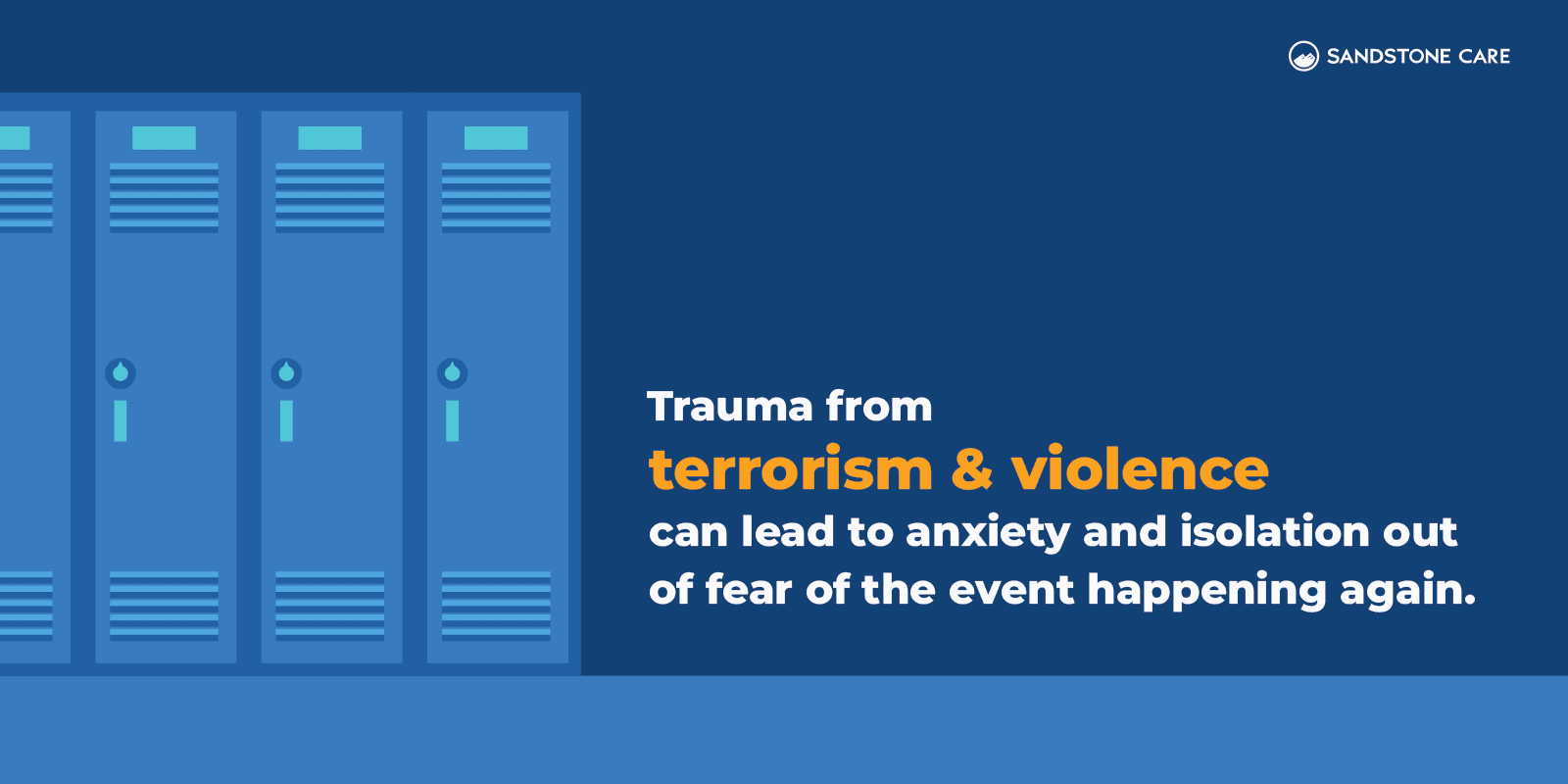
They shatter the expectation that school is a safe place and can trigger fear, grief, hypervigilance, and PTSD symptoms.
The number of school shootings annually has more than quadrupled over the last several decades. Additionally, the rate of death from school shootings has risen more than six times over. Twenty incidents occurred in 1971, compared to 251 incidents in 2021.
Schools are meant to be predictable, structured environments. When violence happens there (or even when it feels possible), daily routines may start to feel frightening: walking into the building, hearing a loud noise in a hallway, getting a school notification, or sitting through a lockdown drill.
Safety stops feeling like something that is guaranteed, which changes behavior, attention, sleep, and a person’s sense that they have any control over what they experience.
Teachers and staff may carry intense responsibility and persistent “what if” thoughts about whether they could have done more, which can fuel guilt, anxiety, and avoidance.
Caregivers may feel torn between protecting their teen and preserving normal independence, while managing their own anger and helplessness.
Importantly, people do not have to be physically present to be affected. Indirect exposure, like news alerts, social media footage, texts from friends, rumors, and ongoing conversations at school can still register as a credible threat, especially for teens.
For some, that exposure contributes to trauma symptoms, anxiety, depression, school avoidance, irritability, or compulsive monitoring of danger (for example, scanning exits or needing constant reassurance).
Mental Health Effects of Gun Violence
How Does Gun Violence Cause Trauma?
Gun violence can cause trauma because it can abruptly shatter a person’s basic sense of safety and predictability. Trauma isn’t only about how frightening an event is; it’s also about how powerless it can make someone feel, and how long the body stays on “high alert” afterward.
This loss of safety can happen if someone is directly threatened or harmed, if they witness harm to others, or if the violence affects someone they love.
With gun violence, trauma can occur when someone:
- Witnesses the violence and sees someone shot, injured, or killed. This can lead to intrusive memories, nightmares, or feeling as though the event is happening again, especially when something reminds them of what they saw or heard.
- Hears gunshots, even if they are not directly in the path of a gun. The sound alone can signal immediate danger, trigger panic and hypervigilance, and sometimes bring back prior traumatic experiences.
- Knows someone who was a victim of gun violence. Grief, shock, and “what if” thoughts can be overwhelming, and people may feel unsafe in places or routines that used to feel normal.
- Experiences chronic exposure to violence in their community. When violence is repeated or expected, the nervous system may stay in survival mode, which can affect sleep, mood, concentration, relationships, and physical health.
Trauma can also develop through indirect exposure, such as repeatedly seeing graphic videos, photos, or detailed accounts on social media or the news, especially for teens, because the brain often absorbs that information as a credible threat, not just a story.
What Are the Emotional Effects of Gun Violence?
The emotional effects of gun violence are numerous and may include anxiety, PTSD, panic attacks, and depression.
Other emotional and psychological effects may include:
- Shock and disbelief following the event
- Intrusive thoughts and flashbacks
- Nightmares
- Avoidance of reminders (e.g., avoiding the area where the violence occurred)
- Anger, guilt, or shame
- Hyperarousal and feeling on edge, easily startled, or vigilant
Can Exposure to Gun Violence Lead to Anxiety or Depression?
Yes, exposure to gun violence can lead to anxiety or depression.
Data shows that exposure to gun violence and injury—including nonfatal firearm injury, firearm homicides, witnessing a shooting, or knowing someone who has been shot— have negative impacts on mental health.
Gun violence exposure is also a risk factor for additional mental health conditions, such as substance use disorders.
Additionally, an increased risk of lifetime suicidal ideation and attempts is linked to gun violence.
How Does Gun Violence Affect Children’s Mental Health?
Gun violence affects children’s mental health negatively and children may experience several long-term effects as a result of the trauma.
Children and adolescents are particularly vulnerable. Their vulnerability is due to developmental factors and their ability to process and express their emotions.
Children may:
- Experience long-term physical, emotional, and behavioral effects
- Lack the language to express how they feel
- Have somatic symptoms such as headaches and stomachaches
- Experience regressions, which can appear as bedwetting or separation anxiety
- Show changes in behavior, such as aggression or withdrawal
- Develop depression, anxiety, or have difficulty concentrating
- Struggle with feeling safe at school or other areas previously considered safe
What Are the Long-Term Mental Health Consequences of Living With Gun Violence?
The long-term mental health consequences of living with gun violence are numerous and negatively impact both personal health and the health of the community.
Communities with elevated rates of violence experience higher rates of mental illness, poorer health outcomes, and other healthcare disparities.
At an individual level, survivors of gun violence may experience:
- PTSD
- Sleep disorders
- Anxiety and panic disorders
- Substance abuse
- Economic or educational setbacks
- Difficulty with relationships

Is this blog hitting close to home?
We’re here to help.
Trauma Symptoms After Gun Violence
What Are the PTSD Symptoms in Gun Violence Survivors?
PTSD symptoms in gun violence survivors can include, but are not limited to, involuntary memories and flashbacks about the event, nightmares, hyperarousal, and avoiding people or places that remind the person of the shooting.
PTSD is a diagnosable condition in the Diagnostic and Statistical Manual of Mental Disorders, Fifth Edition (DSM-5).
To receive a diagnosis, an individual must meet criteria (specific symptoms) across five separate categories and also experience the following:
- Symptoms must last for more than a month
- Symptoms must create some form of distress or impairment
- Symptoms cannot be due to substance use, another illness, or a side effect of a medication
In addition, someone with PTSD must also experience either depersonalization (feeling as if it didn’t happen to them, or that it was a dream) or derealization (feeling distorted or a sense of things not being real).
Lastly, while an individual may experience symptoms of PTSD immediately after a traumatic event, the experience must have been at least six months ago to receive a PTSD diagnosis.
What Are the Signs of Trauma After Witnessing a Shooting?
Witnessing a shooting can lead to several signs of trauma, including, but not limited to:
- Shock, numbness, and initial disbelief
- Feeling unsafe in similar environments (e.g., school or work)
- Sleep disturbances
- Emotional dysregulation, such as irritability and mood swings
- Intrusive thoughts, memories, or flashbacks
- Physical symptoms such as headaches, sweating, increased heart rate, and hyperarousal
Why Do People Have Nightmares and Flashbacks After Gun Violence?
Nightmares and flashbacks after gun violence are often the brain’s attempts at processing traumatic experiences.
They may occur for several reasons, such as:
- Unprocessed trauma: The traumatic memory is not fully integrated, and parts of the experience remain unprocessed.
- Brain changes: Trauma can rewire the brain and lead to maladaptive coping strategies such as rumination and dysregulation.
- Stress response: Brain systems involved in the stress response, such as the amygdala and hippocampus, can trigger vivid sensory or emotional fragments of the event (e.g., a specific smell), making you intensely recall the event.
- Less control during sleep: Sleep is a vulnerable period, and you have less control over your thoughts while you sleep, which can lead to intrusive memories.
How Does Hearing Gunshots Affect Mental Health?
Hearing gunshots affects mental health because it can act as a trigger and is traumatic for many individuals. Gunshots may induce anxiety or a panic attack.
The sudden loud noise and impending potential threat may induce:
- Startle responses
- Anxiety and fear, especially in those with a history of exposure to gun violence
- Hypervigilance
- Difficulty sleeping
- Elevated baseline stress levels
Can Grief After Losing Someone to Gun Violence Cause Depression?
Yes. Grief is a normal response to loss, such as the loss of a loved one or the loss of a sense of safety in an environment, and can cause depression.
When the loss is sudden, violent, or possibly preventable (e.g., if you feel that you could have done something different to alter the event), it may worsen grief and feelings of depression.
Other feelings that are normal after a traumatic event and may co-exist with depression, include:
- Persistent grief
- Guilt or self-blame
- Anger and rage
- Social challenges
- Sleep difficulties
- Appetite changes
- Reduced sense of meaning or purpose in life

Coping and Recovery After Gun Violence
How to recover from witnessing gun violence?
Recovering from witnessing gun violence takes time, support, and professional help.
Many people notice a “survival aftershock” in the days and weeks that follow: intrusive images or sounds, feeling on edge in public places, trouble sleeping, irritability, numbness, or sudden waves of fear. The goal is not to “get over it” quickly, but to help your nervous system come out of danger mode and to reduce the risk of longer-term trauma symptoms.
Steps that may help include:
- Reach out for support (and be specific about what you need). Isolation tends to intensify symptoms. Consider a trauma-informed therapist, your primary care provider, a crisis line if you’re overwhelmed, and trusted people who can sit with you, help with logistics, or accompany you to places that feel hard (work, school pickup, errands).
- Acknowledge and validate your reactions. Anger, grief, fear, nausea, shakiness, numbness, guilt, and “why didn’t I…?” thoughts are common after witnessing violence. Validating yourself can sound like: “My body is reacting to danger. I’m not weak or dramatic.” Avoid pressuring yourself to be “fine” or to tell the story before you’re ready.
- Use grounding when you feel pulled back into the moment. Trauma memories can feel present-tense. Try a quick reset like cold water on your hands, slow exhales (longer out-breath than in-breath), or pressing your feet into the floor and naming where you are and what day it is.
- Limit retraumatizing media exposure. If the event becomes a news story, repeated clips, photos, speculation, and comment threads can keep your brain in a loop. Set time limits, avoid graphic content, turn off notifications, and ask someone else to filter essential updates.
- Prioritize basic stabilization (“small body needs”). Trauma can disrupt appetite and sleep. Focus on regular hydration, simple meals, a consistent bedtime routine (even if sleep is fragmented), light movement (a 10-minute walk counts), and reducing alcohol or drug use that can worsen anxiety, sleep, and flashbacks.
What Is School Shooting Trauma Recovery?
School shooting trauma recovery involves a layered approach to recovery. Elements include the initial crisis response, development of safe spaces, long-term mental health care services, and community healing initiatives.
For example:
- Crisis response may take place at a school in the days following a shooting and include professionals such as counselors, social workers, psychologists, and other psychiatry professionals such as psychiatrists.
- Safe spaces are often established to provide students and staff with the opportunity to discuss and debrief with a licensed mental health professional.
- Longer-term mental health services benefit some individuals, such as ongoing 1:1 counseling with a therapist. Those who need more intensive care may benefit from programs such as partial hospitalization programs (PHP) or intensive outpatient programs (IOP).
What Therapies and Treatments Help Survivors of Gun Violence?
A combination of therapies and treatments, such as therapy combined with medication, may be most effective to help survivors of gun violence.
Specifically, survivors may find the following useful:
- Trauma-focused cognitive behavioral therapy (CBT) to help survivors process their trauma and reduce symptoms.
- Eye movement desensitization and reprocessing (EMDR) is often used as an effective therapy method for PTSD and trauma.
- Exposure therapy may benefit those who need gradual re-exposure to areas near where the trauma occurred.
- Medications, such as selective serotonin reuptake inhibitors (SSRIs), mood stabilizers, anti-anxiety medications, and sleep medications, may help certain individuals under professional supervision.
- Group therapy and peer support can reduce isolation and normalize emotional reactions.
- Integrated services, such as coordinating care between physical health, mental health, schools, and other social supports (e.g., workplace accommodations), can help people during their recovery.
Gun violence is traumatic, and it is normal to need professional help. Sandstone Care is here to support those who are experiencing anxiety and depression as a result of trauma. Treatment is available in both residential and outpatient settings. Call (888) 850-1890.